
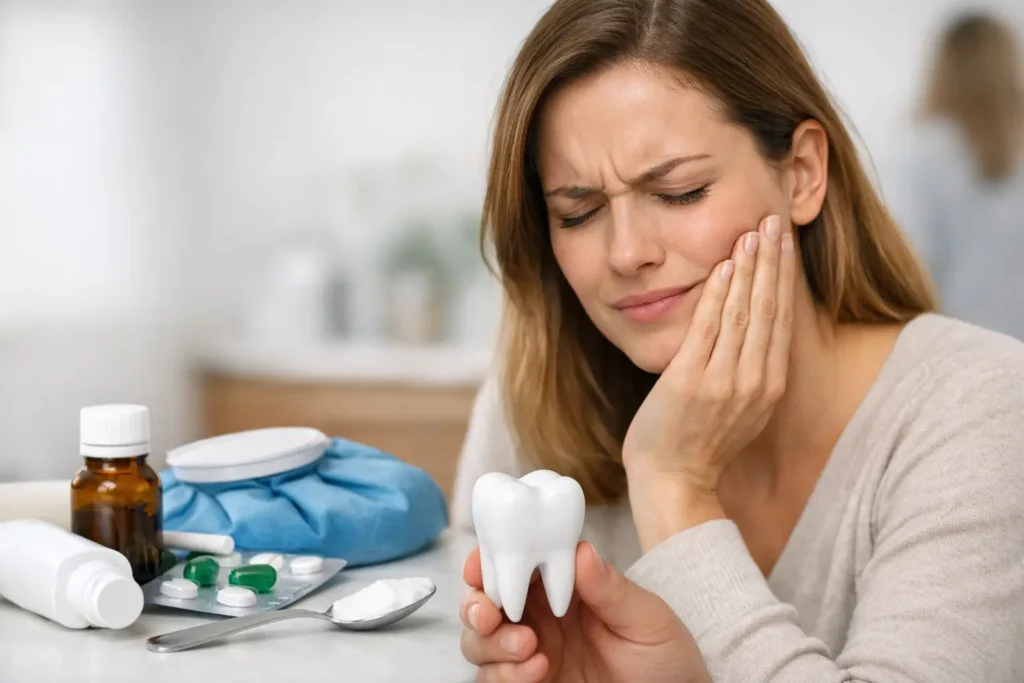
A toothache has a way of taking over everything. Coffee becomes painful, sleep feels impossible, and even a small breath of cold air can trigger a sharp jolt. The best toothache relief methods can make you more comfortable for a few hours or days, but they do not fix the source of the pain. Whether the cause is a cavity, cracked tooth, gum infection, lost filling, or food trapped between teeth, prompt dental care is the safest path to lasting relief.
Best Toothache Relief Methods at Home
Home care is meant to reduce discomfort while you arrange a dental visit. Choose gentle measures, follow medication labels carefully, and avoid anything that could irritate an already sensitive tooth or gum.
Rinse with warm salt water
A warm saltwater rinse is one of the simplest options for a sore tooth or swollen gums. Mix about half a teaspoon of salt into a glass of warm water, swish gently for 20 to 30 seconds, then spit it out. It can help clear debris around the tooth and soothe irritated gum tissue.
Use warm water, not hot water. Extreme temperatures can make pain worse when a tooth nerve is inflamed or exposed.
Floss carefully around the painful tooth
Food lodged between teeth can cause surprising pressure and pain, especially near the gums. Gently floss on both sides of the sore tooth, moving the floss up and down the tooth surface rather than snapping it into the gums. Rinse afterward to remove anything that has been dislodged.
Do not dig into the area with a toothpick, pin, or other sharp object. A little extra irritation can turn a manageable ache into a more painful problem.
Use a cold compress for swelling and throbbing
If your cheek is tender or puffy, hold a cold pack wrapped in a thin towel against the outside of your face for 15 to 20 minutes at a time. The cold can reduce swelling and dull throbbing discomfort. Give your skin a break between applications, and never place ice directly on your skin.
A cold compress is especially useful after a dental injury or when gum inflammation is contributing to facial tenderness. It is not a substitute for treatment if swelling is increasing.
Consider over-the-counter pain medicine safely
For many adults, an over-the-counter pain reliever can provide short-term toothache relief. Acetaminophen or an anti-inflammatory medicine such as ibuprofen may help, depending on your health history and the instructions on the package. Some people should avoid certain medications because of allergies, pregnancy, stomach ulcers, kidney disease, liver disease, blood-thinning medication, or other medical conditions.
Never exceed the labeled dose or combine medicines without advice from a pharmacist, physician, or dentist. Children need age- and weight-appropriate dosing. If you are unsure which option is safe for you or your child, ask a healthcare professional before giving medication.
Keep your head elevated and avoid known triggers
A toothache can feel stronger when you lie flat because pressure may build in the head and jaw area. Rest with an extra pillow if the pain is keeping you awake. For the next day or two, avoid chewing on the painful side and choose soft foods that are not very hot, cold, sweet, or acidic.
Crunchy foods, sticky candy, and very sugary drinks can aggravate a damaged tooth. If cold sensitivity is the main issue, room-temperature foods and drinks may be more comfortable until your appointment.
What Not to Do for a Toothache
Some popular home remedies can cause more harm than help. Do not place aspirin directly against a tooth or gum. It can burn the soft tissue and will not treat the pain at its source. Avoid applying alcohol, hydrogen peroxide at full strength, essential oils, or other harsh substances directly to the gums as well.
Do not try to glue a broken tooth, filling, crown, or veneer back in place with household adhesive. If a restoration comes loose, keep it in a clean container and bring it to your dentist if possible. Temporary dental repair materials may be appropriate in limited situations, but they should only bridge the gap until professional care is available.
Antibiotics are not a home remedy for toothaches. They are only useful when prescribed for a specific bacterial infection, and they do not repair decay, a fracture, or an inflamed tooth nerve. Taking leftover antibiotics can delay proper treatment and contribute to antibiotic resistance.
Why Tooth Pain Needs a Dental Exam
Tooth pain is a signal, not a diagnosis. A cavity may have reached the inner nerve of the tooth. A crack may only hurt when you bite down. Gum disease, a failing filling, an abscess, teeth grinding, or even sinus pressure can create similar symptoms. The right treatment depends on identifying the actual cause.
A dental exam may include digital imaging and a close evaluation of the tooth, surrounding gums, bite, and nearby teeth. Modern diagnostic tools help dentists find concerns that are difficult to see from the surface alone. In some cases, a small filling or adjustment can resolve the issue. In others, treatment may involve a crown, root canal therapy, gum care, or removal of a severely damaged tooth.
Getting checked early often means more conservative treatment, less discomfort, and fewer unexpected costs. Pain that comes and goes still deserves attention. A tooth nerve can stop hurting after it becomes severely damaged, while infection continues to develop underneath.
When a Toothache Is a Dental Emergency
Call a dentist promptly for severe pain, a tooth that is broken or knocked out, a lost crown with significant sensitivity, or swelling around the tooth or jaw. Same-day care is particularly important if pain is preventing you from eating, sleeping, or functioning normally.
Seek urgent medical attention right away if swelling is spreading into your face, jaw, neck, or around the eye, or if you have trouble breathing, swallowing, speaking, or opening your mouth. Fever, chills, confusion, or feeling generally unwell along with dental pain may also signal a serious infection that needs immediate evaluation.
For families in Surrey, South Zone Dental welcomes dental emergencies, walk-ins, new patients, and CDCP patients. Quick access matters when a toothache is disrupting your day, and a professional assessment can bring clarity when home measures are no longer enough.
How to Prepare for Your Appointment
Make a quick note of when the pain started and what triggers it. Is it a constant ache, a sharp pain with cold drinks, pressure when biting, or soreness near the gums? Let the dental team know about swelling, fever, recent trauma, a lost restoration, and any medications you have taken.
If a tooth has chipped or a crown has come off, bring the piece with you in a clean container when possible. Continue brushing gently with a soft toothbrush, but do not scrub the painful spot aggressively. Keeping the area clean can help prevent additional irritation before you are seen.
The most helpful thing you can do for a toothache is treat temporary relief as a bridge, not the finish line. A warm rinse, cold compress, and appropriate pain medicine may get you through the day, but a timely dental visit protects your comfort, your tooth, and your smile.