
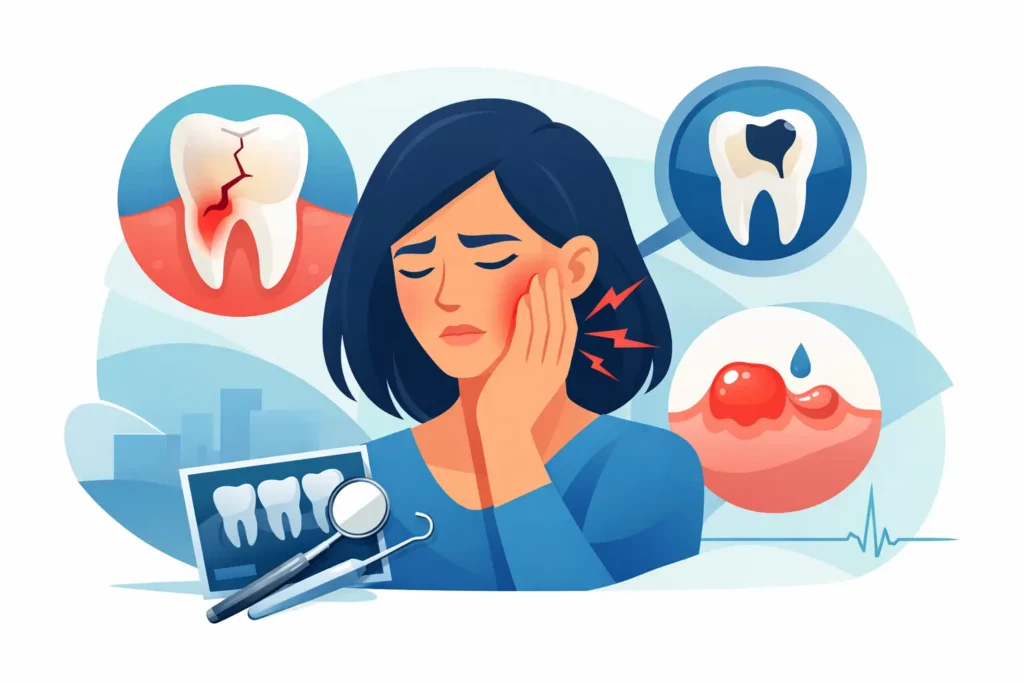
A tooth that twinges when you drink something cold is frustrating. A toothache that keeps you awake, makes it hard to chew, or comes with swelling is different. When should tooth pain worry you? The answer depends on the intensity, how long it lasts, and the symptoms happening around it. Some pain can wait for a prompt dental visit, but certain signs need same-day attention to protect your health and your tooth.
When should tooth pain worry you most?
Tooth pain becomes more concerning when it is severe, persistent, worsening, or paired with swelling, fever, or changes in how your mouth functions. Teeth do not usually hurt without a reason. The discomfort may come from a cavity, a cracked tooth, gum disease, an exposed root, a failing filling, or an infection deep inside the tooth.
A brief flash of sensitivity after ice cream may happen when enamel has worn down or gums have receded. It is still worth mentioning at your next appointment, especially if it is becoming more frequent. But pain that lingers for 30 seconds or longer after hot or cold foods can mean the inner nerve of the tooth is inflamed. That calls for a dental assessment soon.
Pain can also be misleading. An infected tooth may feel like it is coming from the upper jaw, lower jaw, ear, or even the side of the face. If you cannot identify the exact tooth, do not assume the problem will settle on its own. A dental exam and diagnostic imaging can find the source before the issue becomes more complicated.
Signs you should call a dentist today
A same-day dental visit is a good idea if pain is interrupting normal life. This includes throbbing pain, pain when biting, or a toothache that is getting stronger despite over-the-counter pain medication. Early treatment can often be simpler and more affordable than waiting until an infection or fracture becomes severe.
Call a dentist promptly if you notice any of these warning signs:
- Swelling in the gums, cheek, jaw, or face
- A pimple-like bump on the gums, drainage, or a bad taste that keeps returning
- Fever, chills, or feeling generally unwell along with dental pain
- A broken, loose, or knocked-out tooth after an injury
- Pain that prevents sleep, eating, speaking, or opening your mouth comfortably
Swelling deserves particular attention. It can be a sign of a dental abscess, which is a pocket of infection around a tooth or gum tissue. An abscess will not heal simply because the pain temporarily eases. In some cases, the pressure releases and the nerve inside the tooth stops responding, but the infection can remain and spread.
If swelling is spreading quickly, you have trouble swallowing or breathing, or you cannot open your mouth normally, seek emergency medical care immediately. These symptoms can indicate a serious infection that needs urgent treatment beyond a routine appointment.
Tooth pain that can wait briefly, but not indefinitely
Not every sore tooth is an emergency, but it should not be ignored. Mild sensitivity to cold, sweets, or brushing can be caused by early decay, worn enamel, a small crack, gum recession, or whitening-related sensitivity. If it is brief and predictable, schedule a regular dental visit rather than waiting months to see whether it gets worse.
Tender gums or a dull ache after flossing can occur when you begin cleaning an area that has been inflamed for a while. Gentle brushing and daily flossing may help, but bleeding, swelling, or soreness that continues for more than a week needs professional attention. Gum disease is often painless in its early stages, which is one reason routine checkups matter.
Pain after a filling, crown, or other dental procedure can be normal for a short period. Your tooth and surrounding tissues may need time to settle, particularly after deeper work. However, contact your dentist if pain is sharp, increases after a few days, lasts longer than expected, or your bite feels uneven. A restoration that is even slightly too high can make chewing painful and strain the tooth.
Why waiting can make tooth pain harder to treat
A small cavity may not cause symptoms at first. As decay moves deeper, it can irritate the nerve and cause sensitivity. Once bacteria reach the inner pulp, pain may become spontaneous, throbbing, and difficult to control. At that stage, the tooth may need more extensive treatment to remove infection and preserve it.
The same is true for cracked teeth. A tiny crack may only hurt when you release your bite on something hard. Left untreated, the crack can deepen or allow bacteria inside the tooth. Teeth cannot heal a crack the way skin heals a cut, so prompt evaluation gives your dentist the best chance to protect the natural tooth.
There is a practical side to acting early, too. Treating a cavity, replacing a damaged filling, or adjusting a bite is generally less involved than managing an advanced infection or a severely fractured tooth. If cost is a concern, ask about your treatment options before the problem becomes urgent. Delaying because a toothache comes and goes can lead to fewer choices later.
What to do until you are seen
Keep the area clean by brushing gently and rinsing with warm salt water. Floss carefully around the painful tooth in case food or debris is trapped between the teeth. A cold compress on the outside of the cheek may help with pain and swelling after an injury or while waiting for care.
Use over-the-counter pain medicine only as directed on the label and only if it is safe for you based on your health history. Do not place aspirin, alcohol, or other substances directly on the gum or tooth. These home remedies can burn soft tissue and do not treat the cause of the pain.
Avoid very hot, very cold, sugary, or hard foods if they trigger discomfort. Chew on the other side of your mouth when possible. If a tooth has broken, save any larger pieces and bring them to your appointment. For a knocked-out adult tooth, handle it by the crown rather than the root, gently rinse it if dirty, and seek immediate dental care.
A comfortable place to get answers quickly
You do not need to diagnose a toothache at home. A dentist can examine the tooth, gums, bite, and surrounding bone to determine whether the concern is decay, infection, a crack, gum inflammation, or another issue. Modern diagnostic tools can help identify problems that are not visible from the surface alone.
For Surrey families, South Zone Dental welcomes new patients, walk-ins, and dental emergencies, with care designed to be accessible, comfortable, and clear. Whether the fix is straightforward or requires more involved treatment, knowing what is happening is the first step toward relief.
If your tooth is trying to get your attention, listen to it. A quick call today can spare you a painful night, a larger problem, and unnecessary stress tomorrow.