
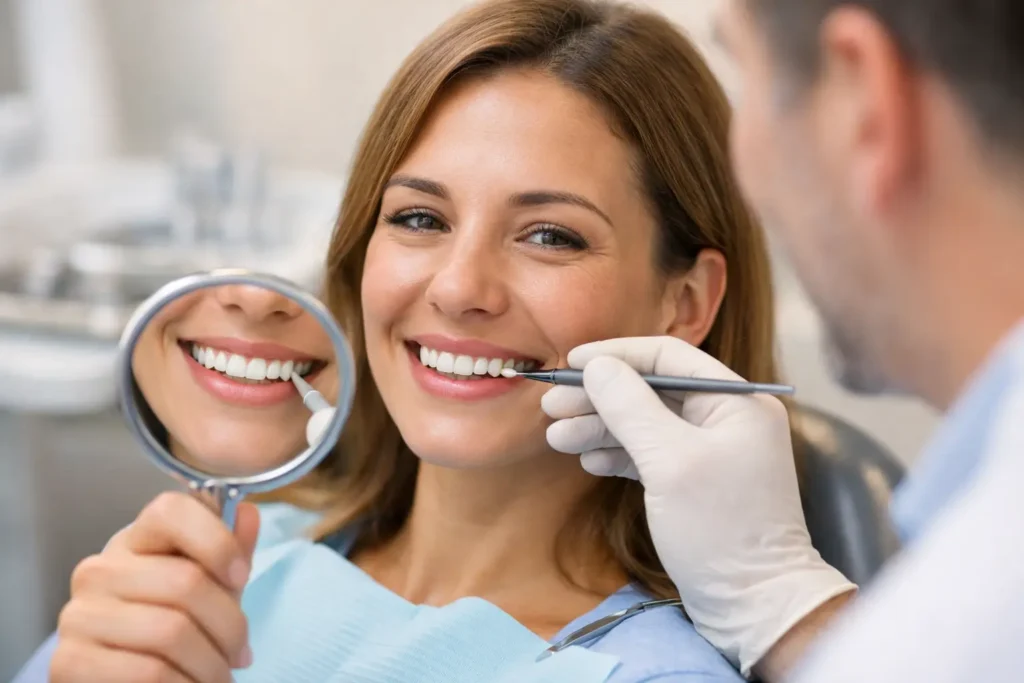
A small chip on a front tooth can feel much bigger than it looks. It may catch your eye in every photo, make you hide your smile, or leave a rough edge that bothers your tongue. Tooth bonding for front teeth is a conservative cosmetic treatment that can often repair these concerns in one visit while preserving as much healthy tooth structure as possible.
For many patients, bonding is an affordable, practical way to improve a smile without committing to more extensive treatment. The right choice depends on the size of the concern, your bite, the condition of your enamel, and the result you want to achieve.
What Is Tooth Bonding for Front Teeth?
Dental bonding uses a tooth-colored composite resin to reshape, rebuild, or improve the appearance of a tooth. Your dentist applies the resin in thin layers, sculpts it to match the surrounding teeth, hardens it with a curing light, and polishes it for a natural finish.
Because front teeth are highly visible, color matching and shaping matter. A well-planned bonding treatment should blend with your smile rather than look like a patch. The goal may be to restore a chipped corner, soften an uneven edge, close a small space, conceal a minor crack, or improve the look of a tooth that appears shorter or differently shaped than the teeth beside it.
Bonding is not the same as a veneer or a crown. A veneer is a custom-made shell that covers the front surface of a tooth, while a crown covers the entire tooth. Bonding is usually the more conservative option because it often requires little to no removal of natural enamel.
Concerns Bonding Can Correct
Front tooth bonding is especially useful for small to moderate cosmetic changes. It can repair chips caused by an accident, wear, or biting into something hard. It can also address small gaps, irregular tooth edges, slight shape differences, and certain discolorations that do not respond well to whitening.
It may also be a good option after orthodontic treatment if teeth are healthy but need minor contouring for a more balanced appearance. Some patients choose bonding to test a smile change before deciding whether they want veneers later.
There are limits. Composite resin cannot correct every concern safely or predictably. A large fracture, deep decay, a significantly weakened tooth, or severe bite-related wear may require a different approach. If teeth are very crowded, rotated, or spaced apart, orthodontic treatment may create a healthier and more stable result than trying to change everything with resin.
What Happens During a Bonding Appointment?
Bonding is commonly completed in a single appointment, although multiple teeth or more detailed smile changes may take longer. Your dentist begins by examining the tooth, gums, and bite. This step matters because a cosmetic concern can sometimes be a sign of grinding, enamel erosion, decay, or an old injury that needs attention first.
Once the treatment plan is clear, the dentist selects composite shades that complement your natural tooth color. The tooth surface is gently prepared so the material can adhere properly. Then the resin is applied and shaped carefully, often in several layers to create realistic depth and translucency.
A specialized light hardens the material. Your dentist refines the shape, checks how your teeth come together when you bite, and polishes the bonded area. You should be able to leave with a smoother, more even-looking tooth and return to normal activities right away unless your dentist gives you specific instructions.
For a front tooth, the bite check is more than a finishing detail. If the bonded edge repeatedly hits against an opposing tooth with too much force, it is more likely to chip. Careful planning helps protect the repair.
Is Bonding the Right Option for Your Smile?
Tooth bonding for front teeth can be an excellent choice when the tooth is structurally sound and the desired change is relatively modest. It is often appealing to patients who want a fast improvement, prefer a less invasive treatment, or are looking for a lower initial cost than veneers or crowns.
The best candidates usually have healthy gums, manageable bite forces, and enough enamel for reliable bonding. Patients who clench or grind their teeth can still be candidates, but they may need a nightguard to reduce the risk of chipping or wear. If you regularly bite your nails, chew ice, open packages with your teeth, or use your front teeth to hold objects, those habits can shorten the life of the bonding.
Your dentist may recommend another treatment if the tooth has a large crack, extensive filling material, major discoloration, or damage that reaches deeper into the tooth. A veneer can offer more complete coverage for certain cosmetic goals. A crown may be the safer choice when a tooth needs strength and protection, not just a visual improvement.
How Long Does Front Tooth Bonding Last?
Bonding is durable, but it is not permanent. Many bonded front teeth last several years, and some last longer with attentive care. Lifespan varies based on the size and location of the bonding, your bite, daily habits, and regular dental maintenance.
Composite resin can gradually lose some shine or pick up stains from coffee, tea, red wine, tobacco, and deeply colored foods. Unlike natural enamel, bonded material does not whiten with bleaching treatment. If you are considering whitening, it is often best to do that before bonding so the resin can be matched to your brighter tooth shade.
Protect your investment by brushing twice daily with a soft toothbrush, flossing consistently, and keeping regular dental visits. Avoid biting hard foods directly with your front teeth when possible. If a bonded edge becomes rough, stained, or chipped, it can often be polished, repaired, or replaced without starting from scratch.
Cost Factors to Consider
The cost of dental bonding is typically influenced by how many teeth need treatment, the amount of reshaping required, the complexity of the color match, and whether any underlying dental care is needed first. A simple repair to one chipped corner is very different from detailed bonding across several front teeth.
Bonding is frequently less expensive upfront than veneers or crowns, which is one reason it is a popular choice for cost-conscious patients. However, it may need periodic touch-ups or replacement over time. When comparing options, consider both the immediate cost and the expected maintenance.
Insurance coverage varies. If bonding repairs a tooth damaged by trauma or improves function, some plans may provide partial coverage. If it is performed only for appearance, it may be considered cosmetic. Asking for a clear treatment estimate before starting helps you make a decision that fits your goals and budget.
Choosing a Dentist for a Natural-Looking Result
The material itself is only part of the result. Front teeth require careful attention to symmetry, proportions, bite, surface texture, and how light reflects from the tooth. An overly bulky repair or a mismatch in shade can stand out, while thoughtful bonding should look comfortable and natural when you speak and smile.
At South Zone Dental, patients can receive a complete evaluation before choosing a cosmetic treatment. Modern diagnostic tools and an experienced clinical approach help identify whether bonding is the right solution or whether another option will better protect long-term oral health. For patients in Surrey, that means everyday dental care, smile enhancement, and follow-up support can be coordinated in one welcoming office.
Bring up specific details at your consultation. Show a photo of the chip if it has changed over time, mention any sensitivity, and explain what you would like to see differently in your smile. The most satisfying cosmetic result is one that looks like your own teeth at their best, while still feeling comfortable every day.