
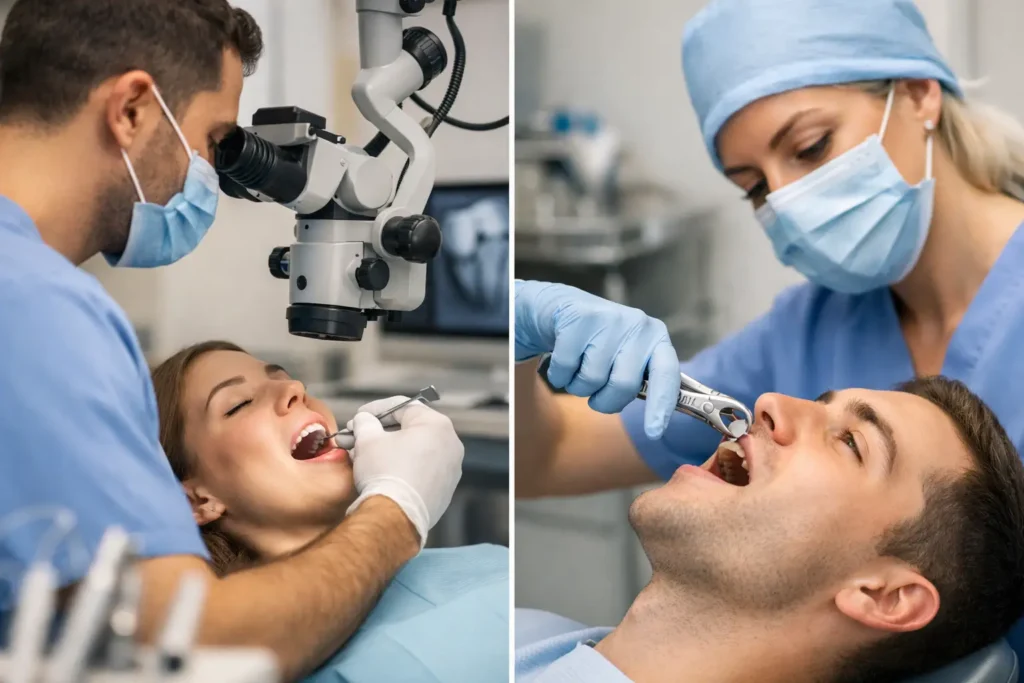
A cracked tooth that wakes you up at night, a deep cavity, or a sudden dental infection can make one decision feel urgent: root canal versus extraction. Both treatments can stop pain and address infection, but they take very different paths. One aims to save your natural tooth. The other removes a tooth that may no longer be healthy or predictable to keep.
The right choice is not simply about which treatment costs less today or which appointment sounds easier. It depends on how much healthy tooth structure remains, whether the infection can be treated, the condition of the supporting bone and gums, and your long-term plans for your smile. A thorough exam and digital imaging give your dentist the information needed to recommend care with confidence.
Root Canal Versus Extraction: The Main Difference
A root canal treatment removes infected or inflamed tissue from inside a tooth. Your dentist cleans and disinfects the narrow canals in the roots, seals them, and restores the tooth. In many cases, a crown or another protective restoration is recommended afterward, especially for back teeth that handle heavy chewing forces.
Extraction removes the entire tooth, including its roots. It may be the safest option when a tooth is severely broken, extensively decayed below the gumline, split through the root, or too unstable to restore. Once the tooth is removed, the conversation often shifts to whether the space should be replaced with an implant, bridge, or removable tooth replacement.
Neither treatment is automatically “better.” When a natural tooth can be restored with a good long-term outlook, preserving it is often preferred. When saving the tooth would require repeated treatment with an uncertain result, removal may protect your comfort, oral health, and budget from further surprises.
When a Root Canal May Be Recommended
A root canal can be an excellent option when the infection is contained within a tooth that still has enough sound structure to rebuild. Many patients are surprised to learn that modern root canal care is designed to relieve the pain caused by infection, not create it. Local anesthetic and modern techniques help keep treatment comfortable.
Your dentist may recommend a root canal if decay has reached the nerve, a crack has irritated the pulp but does not extend too far down the root, or an abscess has formed around a tooth that remains stable. The goal is to remove the source of infection while maintaining your natural bite and appearance.
Keeping your tooth has practical advantages. Natural teeth help maintain chewing function and can prevent neighboring teeth from drifting into an empty space. You also avoid the added decisions and costs that can come with replacing a missing tooth. For a visible front tooth, saving the tooth can be particularly valuable for maintaining a natural-looking smile.
That said, a root canal is only as successful as the tooth’s foundation. If there is very little healthy tooth left above the gums, advanced gum disease, severe root damage, or a deep fracture, the restoration may not last as long as you would hope. A dentist should explain not only whether a tooth can be saved, but whether it makes sense to save it.
What recovery is like after a root canal
It is common to have tenderness when biting for a few days after treatment. Most people manage this with the aftercare instructions provided by their dental team and return to normal routines quickly. Avoid chewing hard foods on a tooth with a temporary filling or restoration until it has received its final protection.
The final restoration matters. A treated tooth can become more brittle over time, particularly if it is a molar or has lost a large amount of tooth structure. A well-designed crown or conservative restorative treatment helps it handle daily function more safely.
When Extraction May Be the Healthier Choice
Extraction can be the right answer when a tooth is beyond reliable repair. Examples include a vertical root fracture, decay extending too far below the gumline, severe bone loss around the tooth, or damage so extensive that a restoration cannot be properly supported.
Removing a hopeless tooth can bring real relief. It eliminates an active source of infection and allows the area to heal. In emergency situations, extraction may also be the fastest way to address a tooth that cannot be restored and is causing significant pain.
An extraction is not always the end of treatment, though. A missing tooth can affect chewing, speech, and the way nearby teeth fit together. Over time, neighboring teeth may tip toward the gap, and the jawbone in that area can shrink. These changes are not identical for every patient, but they are important to consider before deciding to leave a space open.
For many patients, a dental implant offers a stable replacement that looks and functions much like a natural tooth. A bridge may be appropriate in other situations, and a removable option can provide an affordable solution. The best replacement plan depends on your oral health, timeline, finances, and personal goals.
What recovery is like after an extraction
After an extraction, a blood clot forms in the socket and protects the healing area. Following instructions is essential: do not smoke, use straws, or rinse forcefully during the early healing period, as these actions can disturb the clot and increase the risk of dry socket.
Some swelling and soreness are expected, particularly after a more complex extraction. Your dental team will provide guidance on pain relief, food choices, cleaning the area, and when to return for follow-up care. Call promptly if pain worsens after initial improvement, bleeding does not slow, or you develop fever, increasing swelling, or trouble swallowing.
Cost Is Part of the Decision, But It Is Not the Whole Decision
It is understandable to compare the immediate price of a root canal with an extraction. An extraction often has a lower upfront cost, particularly if the tooth is removed without replacement. But if you later decide to replace the tooth, the overall investment may include the extraction, bone support if needed, and the replacement itself.
A root canal may involve the treatment plus a crown or restoration. Yet, when it successfully preserves a tooth for years, it can be a strong value. Dental insurance coverage, CDCP eligibility, and the complexity of your specific case can all affect out-of-pocket costs.
Ask for a clear treatment estimate that shows the likely phases of care. You deserve to understand what is needed now, what may be needed later, and which options are medically sound. Affordable care should still be care that supports a healthy, lasting result.
Questions That Lead to a Better Decision
Before choosing treatment, ask your dentist about the prognosis of the tooth. A useful conversation includes whether the tooth is restorable, how long the recommended restoration is expected to last, and what could change that outlook. It should also cover alternatives, expected recovery, and the consequences of delaying care.
If you are leaning toward extraction, ask whether the space needs to be replaced and when that planning should begin. If you are considering a root canal, ask what final restoration will protect the tooth and whether any cracks or gum concerns affect its prognosis.
Modern diagnostic tools, including detailed digital imaging, help reveal infections, bone changes, and fractures that may not be obvious during a visual exam. At South Zone Dental, the focus is on helping Surrey patients understand their options without pressure, whether they arrive for planned care or need urgent attention.
Do Not Wait on Signs of Infection
Tooth infections do not reliably resolve on their own. Contact a dentist promptly for persistent toothache, sensitivity that lingers after hot or cold foods, swelling in the gums or face, a pimple-like bump on the gum, pain when biting, or a loose and painful tooth. Early care may give you more options to save the tooth.
Facial swelling that spreads quickly, difficulty breathing or swallowing, fever, or swelling near the eye requires urgent medical attention. Your safety comes first.
The best choice is the one that gives you the healthiest, most predictable path forward. Whether that means preserving a natural tooth with a root canal or removing a tooth that cannot be reliably saved, timely care can get you out of pain and back to eating, speaking, and smiling with confidence.