
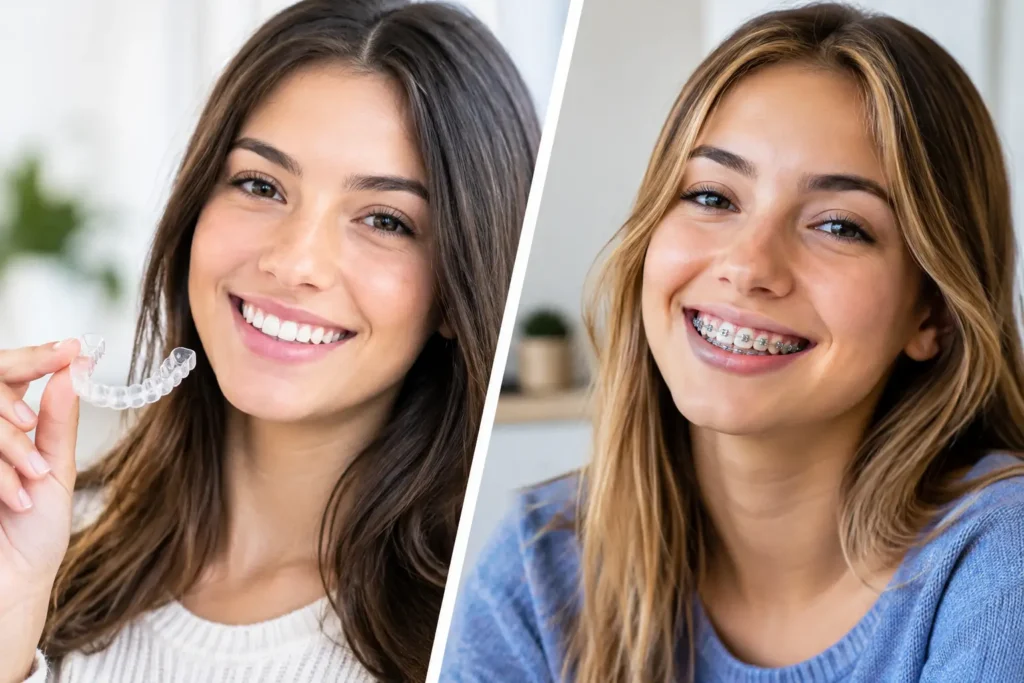
A straighter smile can change more than a photo. It can make brushing easier, improve bite comfort, and help you feel less self-conscious when you speak or laugh. When comparing Invisalign versus metal braces, the best choice is rarely about which treatment is “better” overall. It is about which option can safely and predictably correct your concerns while fitting your lifestyle, budget, and daily routine.
For families and adults in Surrey, orthodontic treatment should feel clear and manageable from the first consultation. A modern assessment helps identify what is happening beneath the surface, not just what you can see in the mirror. From there, your dental team can recommend a plan designed around your teeth, gums, bite, and goals.
Invisalign Versus Metal Braces: The Main Difference
Invisalign treatment uses a series of clear, removable plastic aligners. Each set applies gentle, planned pressure to guide teeth into position. You typically wear aligners for 20 to 22 hours a day, changing to the next set according to your dentist’s instructions.
Metal braces use brackets bonded to the teeth and a wire that is adjusted over time. Because braces stay in place throughout treatment, they work continuously without relying on the patient to remember to put them back in. Their appearance is more noticeable, but today’s brackets are generally smaller and more comfortable than many people expect.
Both systems can create healthy, attractive results. The right answer depends on the movements your teeth require and how realistically each treatment fits into your life.
When Clear Aligners May Be a Good Fit
Clear aligners are popular with adults, teens, and working professionals who want a discreet option. Because they are nearly invisible from a normal speaking distance, they can be especially appealing for people who spend time in meetings, on video calls, at school, or in customer-facing roles.
The biggest everyday advantage is removability. You can take your aligners out to eat, drink anything other than water, brush, and floss. That means there are no food restrictions and no need to work around brackets when cleaning between teeth. If you enjoy popcorn, crunchy vegetables, gum, or occasional sticky treats, aligners offer more flexibility at mealtimes.
Clear aligners can also be a strong option for mild to moderate crowding, gaps, or relapse after earlier orthodontic treatment. Some more complex cases can be treated with aligners as well, particularly when treatment planning is detailed and the patient follows the schedule carefully.
That last point matters. Aligners only work when they are worn. Taking them out for long lunches, forgetting them after brushing, or leaving them in a napkin at a restaurant can slow progress. For patients who are likely to struggle with 20 to 22 hours of wear each day, another approach may be more dependable.
What to expect with aligners
Most patients experience pressure or tenderness for a day or two after starting a new tray. This is usually a sign that the aligner is actively moving teeth, and it often settles quickly. You may have a short adjustment period with speech, especially with certain sounds, but most people adapt within days.
Attachments may also be part of treatment. These are small, tooth-colored shapes placed on selected teeth to help the aligners grip and create specific movements. They are subtle, but aligners are not always completely invisible up close.
When Metal Braces May Be the Better Choice
Metal braces remain one of the most reliable orthodontic tools available. They are often recommended for significant crowding, major bite issues, teeth that need more controlled rotation, or cases where tooth movement is complex. They can also be a practical choice for younger patients who may not yet be ready for the responsibility of removable aligners.
Because braces are fixed, treatment does not depend on daily wear habits. Once they are in place, they are working around the clock. This can bring peace of mind to parents and patients who do not want to worry about lost trays or inconsistent use.
Braces are not just for teens. Adults with complex orthodontic needs may benefit from their precision and strength. The look of metal brackets is a trade-off, but some patients prefer knowing their treatment is always on track without needing to make repeated daily decisions.
Living with braces
Braces require a few food changes. Hard candies, chewing ice, sticky caramel, and crunchy foods that can bend wires or loosen brackets should be avoided. Foods such as apples and carrots can still be enjoyed when cut into smaller pieces.
Cleaning also takes more time. A toothbrush, floss threader, interdental brush, or water flosser can help remove plaque around brackets and beneath wires. Consistent home care is essential, because food and plaque can collect around braces and increase the risk of irritated gums or permanent white spots on enamel.
At first, brackets and wires can rub against the cheeks or lips. Orthodontic wax can ease these sore spots while your mouth adjusts. Regular adjustments may cause temporary pressure, much like changing to a new aligner tray.
Cost, Timing, and the Value of a Personalized Plan
Cost is a real part of the decision, and no two treatment plans are exactly alike. The total fee for Invisalign or braces depends on the complexity of the case, expected treatment length, required records, and any supporting procedures needed before or during orthodontic care. In some cases, the difference in cost is smaller than patients expect. In others, one option may offer a clearer financial advantage.
Insurance coverage and available payment arrangements can also affect your decision. Rather than choosing solely by an advertised starting price, ask for a complete explanation of what is included: appointments, refinements, retainers, repairs, and follow-up care. A transparent plan makes it easier to budget with confidence.
Treatment time varies too. Many cases take roughly 12 to 24 months, though minor alignment concerns may take less time and complex bite corrections may take longer. Aligners are not automatically faster, and braces are not automatically slower. Treatment stays most efficient when appointments are kept, oral hygiene is strong, and instructions are followed.
Your Bite Matters as Much as Straight Teeth
A straight front smile is only part of orthodontic health. Your upper and lower teeth also need to meet in a way that supports comfortable chewing and helps protect teeth from uneven wear. An overbite, underbite, crossbite, open bite, or deep bite can affect how your teeth function, not just how they look.
This is why a professional exam is worth more than an online quiz or a few photos. Digital imaging, scans, and a careful evaluation of your jaw relationship can reveal concerns that are easy to miss. A treatment recommendation should protect the long-term health of your teeth and gums while working toward the smile you want.
If you have active gum disease, untreated cavities, frequent jaw pain, or damaged teeth, those issues may need attention first. Healthy foundations support better orthodontic outcomes.
Questions to Ask Before You Decide
At your consultation, describe what bothers you most about your smile and what you need from treatment day to day. Ask whether both options can achieve your desired result, what the expected timeline is, and how much daily responsibility each choice will require.
It also helps to ask what could affect your final cost, whether refinements are likely, and what retainers will be needed after treatment. Retainers are essential with both Invisalign and braces. Teeth naturally tend to shift over time, so wearing retainers as directed protects the time and investment you put into your new smile.
South Zone Dental can help patients understand their orthodontic options in a welcoming setting, with modern diagnostic tools and a focus on comfortable, high-quality care. Whether you are exploring treatment for yourself or your child, a consultation gives you a clear place to start.
The right treatment is the one you can follow consistently and feel good about from start to finish. Bring your questions, your budget concerns, and your smile goals to the conversation – a personalized plan can turn uncertainty into a practical next step.