
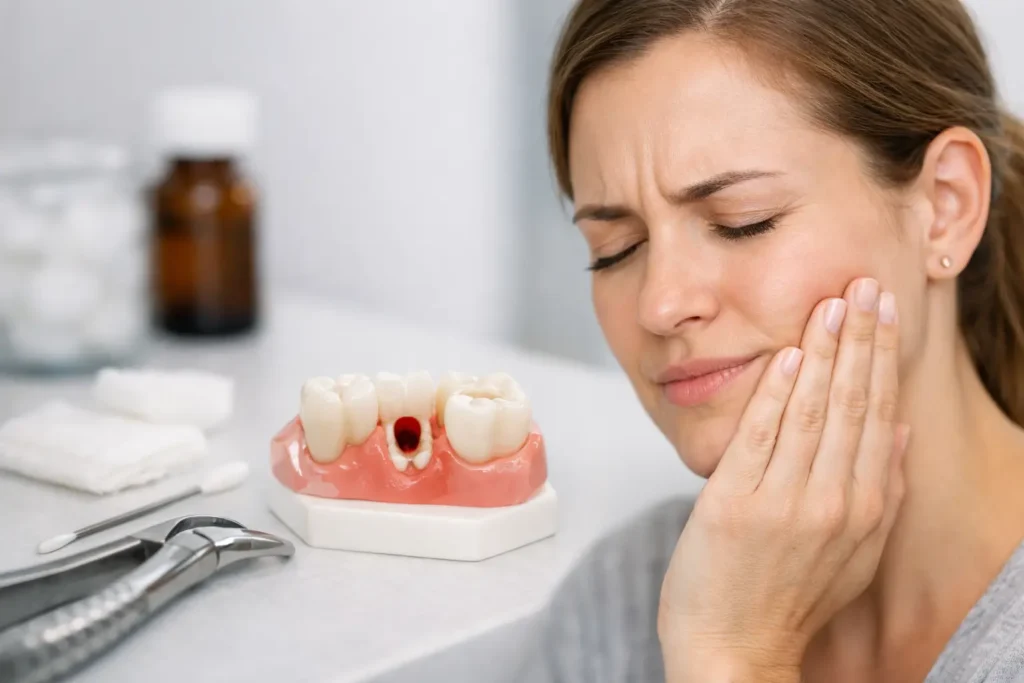
A tooth extraction should bring relief, not create a new source of pain a few days later. Knowing how to prevent dry socket starts with protecting the blood clot that forms in the empty tooth socket. That clot is your body’s natural bandage. It covers the bone and nerves while the area heals, so keeping it in place is the most important part of your aftercare.
Dry socket, also called alveolar osteitis, can happen when the clot dissolves too early or becomes dislodged. It is more common after wisdom tooth removal, but it can occur after any extraction. The good news is that careful aftercare can greatly lower the risk.
What causes dry socket after an extraction?
After your dentist removes a tooth, a blood clot develops over the extraction site. New tissue gradually grows beneath and around it. Suction, forceful rinsing, smoking, and certain foods can disturb that clot before healing is far enough along.
Dry socket typically causes pain that becomes stronger rather than better two to five days after the extraction. The discomfort may spread toward the ear, temple, or jaw on the same side. Some people also notice an unpleasant taste or odor. Normal soreness is expected after dental treatment, but worsening pain deserves a call to your dental office.
Your individual risk can depend on the type of extraction, your oral health, whether you smoke, and your medical history. Hormonal birth control and a previous dry socket may also affect risk. Your dentist can give you instructions tailored to your procedure, and those instructions should always take priority over general advice.
How to prevent dry socket in the first 24 hours
The first day is when the clot is most vulnerable. Keep firm, steady pressure on the gauze your dentist places over the site. Bite down gently for the amount of time you were instructed, often 30 to 60 minutes. If the gauze becomes saturated, replace it as directed, but do not repeatedly lift it to check the site. Frequent checking can disturb early clot formation.
Rest for the remainder of the day. Keep your head slightly elevated when lying down and use a cold pack on the outside of your cheek in short intervals to help manage swelling. Take prescribed medications or recommended over-the-counter pain relief exactly as directed. Staying ahead of discomfort makes it easier to rest and avoid touching the area.
Do not rinse, spit forcefully, or use mouthwash during the first 24 hours unless your dentist specifically tells you otherwise. Even a seemingly harmless spit into the sink creates pressure in the mouth that can pull at the clot. If saliva builds up, let it fall out gently rather than forcing it out.
Avoid strenuous exercise, heavy lifting, and activities that raise your heart rate for at least a day. Increased blood pressure can restart bleeding or interfere with the early healing process. Depending on the complexity of your extraction, your dentist may recommend taking it easy longer.
Protect the clot while eating and drinking
Choose soft, cool or lukewarm foods for the first few days. Yogurt, applesauce, scrambled eggs, mashed potatoes, smooth soups that are not hot, and pasta are often comfortable choices. Chew on the opposite side of your mouth whenever possible.
Very hot foods and drinks can increase bleeding and may irritate the extraction site. Crunchy foods such as chips, popcorn, nuts, and crackers can leave sharp pieces near the socket. Rice, seeds, and small grains can also become trapped in the area, so it is often best to wait until you are healing well before adding them back.
Hydration supports recovery, but drink from a regular cup. Do not use straws. The suction created by a straw is one of the most familiar avoidable causes of a disrupted blood clot. This includes smoothies, iced coffee, and protein drinks. A spoon or cup works better for now.
Do not smoke, vape, or use tobacco
If you are looking for the single most effective answer to how to prevent dry socket, avoiding smoking and vaping is near the top of the list. The sucking motion can dislodge the clot, while nicotine reduces blood flow and can slow healing. Tobacco smoke also irritates healing tissue.
Ideally, avoid smoking and vaping for at least 72 hours after an extraction, and longer is better if you can. Your dentist may recommend a longer period based on your procedure and healing. Do not assume that vaping is a safer option for the socket. It still involves suction and may expose the area to heat and chemicals.
If stopping is difficult, let your dental team know before the extraction. They can discuss practical options for getting through the healing period safely. Being honest helps your dentist support you, not judge you.
Keep your mouth clean without disturbing the site
Good oral hygiene reduces bacteria and supports normal healing, but the extraction site needs a gentle approach. On the day of your procedure, brush the rest of your teeth carefully and keep the toothbrush away from the socket. Do not poke the area with your finger, tongue, toothpick, or toothbrush.
After the first 24 hours, many patients are advised to rinse gently with warm salt water. A common mixture is about one-half teaspoon of salt in a cup of warm water. Let the rinse move around your mouth without vigorous swishing, then allow it to drain out gently. Your dentist may provide a different rinse or specific timing, especially after a surgical extraction.
Continue brushing twice daily, taking care around the healing area. Clean teeth and gums help limit plaque buildup, but aggressive brushing does not make the socket heal faster. Gentle and consistent is the right balance.
Follow the instructions for your specific extraction
Not every extraction has the same recovery plan. A simple tooth removal may need only basic precautions, while impacted wisdom teeth, infection, bone grafting, or multiple extractions can require more detailed care. If you receive a prescription antibiotic, take it only as directed and finish it unless your prescriber tells you to stop. Antibiotics are not a substitute for protecting the clot.
If your dentist gave you a syringe for rinsing, do not use it early just because food may have reached the area. Starting too soon can disturb healing. Ask when to begin and how much pressure to use. The same goes for a medicated dressing, special mouth rinse, or follow-up visit.
At South Zone Dental, we make post-extraction care clear and practical because a comfortable recovery matters just as much as the procedure itself. If you are unsure about an instruction, a quick call is always better than guessing.
When pain may be dry socket
Some tenderness, mild bleeding, and swelling are normal in the first days after an extraction. Pain should generally stay manageable and gradually improve. Contact your dentist promptly if pain becomes severe, throbs intensely, starts spreading to your ear or jaw, or gets worse after initially improving.
You should also call if you have a persistent bad taste or smell, a socket that appears empty with visible bone, fever, facial swelling that is getting worse, trouble swallowing, or difficulty breathing. Trouble breathing or swallowing can be urgent and needs immediate medical attention.
Dry socket is treatable. A dentist can gently clean the area and place a medicated dressing to relieve pain while healing continues. Trying to pack the socket yourself with cotton, food, or home remedies can make the problem worse, so leave treatment to your dental team.
Give healing the time it needs
Most people can return to their usual routine gradually within a few days, but the socket continues healing beneath the surface for weeks. Reintroduce firmer foods slowly, and avoid anything that causes sharp pain or gets stuck near the extraction site. Keep follow-up appointments if they are recommended, particularly after wisdom tooth removal or a more complex procedure.
The best aftercare is simple: protect the clot, keep the area clean gently, avoid suction and tobacco, and speak up early if your recovery does not feel right. A little extra caution in the first few days can make the rest of healing much more comfortable.