
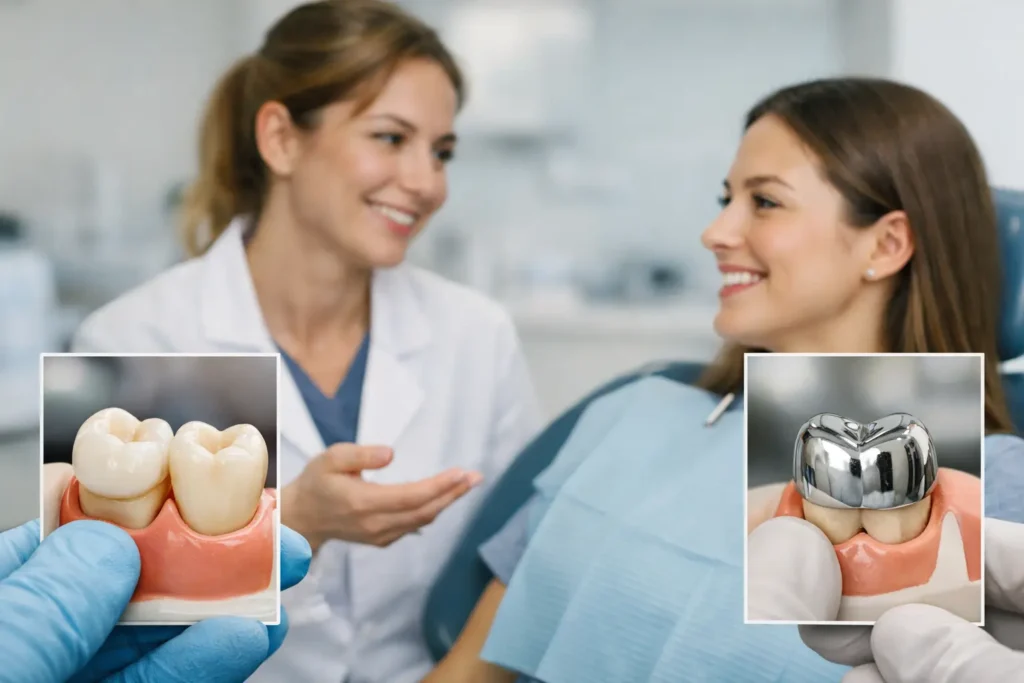
A tooth can look like it needs a crown and still have enough healthy structure to restore more conservatively. That is why the conversation around biomimetic fillings vs crowns matters. The right choice is not simply about covering a tooth or filling a cavity. It is about preserving as much natural tooth as possible while giving the damaged area the strength it needs for everyday chewing.
At South Zone Dental, treatment planning starts with the condition of your tooth, your bite, your symptoms, and your long-term goals. Advanced diagnostics help us look beyond what is visible in the mirror, so you can make a confident decision without feeling rushed into a one-size-fits-all solution.
What Is a Biomimetic Filling?
Biomimetic dentistry aims to restore a tooth in a way that closely reflects how a healthy natural tooth works. Rather than automatically removing additional tooth structure to make room for a full crown, the dentist carefully removes decay or damaged material and rebuilds the tooth with bonded restorative materials.
The word biomimetic means “mimicking life.” In dentistry, that means recreating the tooth’s form, function, and ability to handle pressure as naturally as possible. A biomimetic filling is often more involved than a small, basic filling. It may use layered composite resin and specialized bonding techniques to seal and reinforce the remaining tooth structure.
This approach can be especially useful for a tooth with a moderate cavity, a worn or fractured old filling, or a crack that has not severely weakened the entire tooth. The goal is conservative care: keep healthy enamel and dentin whenever it is safe to do so.
Biomimetic Fillings vs Crowns: The Key Difference
A biomimetic filling rebuilds only the portion of the tooth that has been lost or damaged. A crown covers the entire visible portion of the tooth above the gumline, like a protective cap. Both can be excellent treatments, but they solve different clinical problems.
With a crown, the tooth generally needs to be shaped around all sides so the restoration can fit securely. This can be the most reliable choice when the tooth is heavily broken, has large areas of decay, has undergone root canal treatment, or cannot safely support a bonded restoration.
With a biomimetic filling, the dentist removes less healthy structure because the restoration is bonded directly to the tooth. For the right case, this can help preserve the tooth’s natural strength and reduce the amount of drilling required. However, conservative treatment should never mean under-treating a weak tooth. If a tooth needs full coverage for protection, a filling alone may fail sooner or allow a crack to worsen.
When a Biomimetic Filling May Be the Better Choice
A bonded biomimetic restoration may be considered when enough strong tooth structure remains around the damaged area. For example, it can be a good option for replacing a large failing silver filling, repairing a chipped chewing surface, or treating decay that is significant but has not compromised the tooth’s overall stability.
The benefits are meaningful for many patients. Less removal of healthy tooth structure can make the procedure more conservative. Tooth-colored composite also blends naturally with your smile, and many restorations can be completed in one appointment. Depending on the tooth and the extent of damage, a biomimetic filling may also be more affordable than a crown.
That said, size is not the only factor. A small-looking crack can extend deeper than expected, while a larger filling may still be appropriate if the remaining tooth walls are strong and the bite is manageable. Teeth in the back of the mouth face higher chewing forces, so the location of the damage matters as much as the amount of decay.
When a Crown Provides Better Protection
Crowns are often recommended when a tooth has lost too much structure to safely hold a filling. This includes teeth with extensive fractures, very large existing restorations, repeated breakdown around old fillings, or deep decay that leaves thin, fragile walls behind.
A crown can also be an important protective step after root canal treatment. A root canal-treated back tooth may become more vulnerable to fracture because a substantial amount of tooth structure has been removed or weakened by previous decay. Full coverage can distribute chewing pressure and help prevent a crack from splitting the tooth further.
Crowns are made from durable materials such as porcelain, ceramic, or zirconia. They are customized for your bite, tooth color, and surrounding smile. While a crown requires more preparation than a biomimetic filling, it can be the more predictable long-term investment when the tooth is structurally compromised.
A crown is not always permanent protection, however. It still needs daily brushing, flossing, regular exams, and attention to the gumline. Decay can develop around a crown’s edge, and habits such as grinding, chewing ice, or using teeth to open packages can damage both crowns and natural teeth.
How Dentists Decide Between the Two
The best recommendation comes from a careful evaluation, not a quick glance at the tooth. Your dentist considers how much healthy enamel remains, whether cracks are present, the depth and location of decay, your gum health, and how your teeth come together when you bite.
Digital X-rays can reveal decay between teeth, changes around the root, or concerns beneath an older restoration. A clinical exam helps identify weakened walls, staining around fillings, tenderness, and bite-related stress. In some cases, the final decision is made after an old filling or decay is removed and the true condition of the tooth can be seen.
Your history matters too. If you grind your teeth at night, have a strong bite, or have broken restorations in the past, a crown may offer a safer level of protection. If you have a stable bite and a tooth with solid remaining structure, a biomimetic filling may preserve more of what is healthy.
Cost, Time, and Long-Term Value
Cost is understandably part of the decision. Biomimetic fillings are often less expensive upfront than crowns because they usually require less material, less laboratory work, and fewer appointments. A crown is a larger investment, but it may prevent a weakened tooth from fracturing into a problem that requires more complex treatment.
The less expensive treatment today is not always the better value over time. A filling placed on a tooth that truly needs a crown may chip, leak, or break under pressure. On the other hand, crowning a tooth that could be restored conservatively may remove healthy structure unnecessarily. The value comes from matching the treatment to the tooth.
Treatment time can differ as well. Many biomimetic fillings are completed in one visit. Traditional crowns often take more than one appointment, although digital technology and treatment options can affect the timeline. If you have pain, swelling, or a broken tooth, the immediate priority is stabilizing the situation and preventing further damage.
Questions Worth Asking at Your Appointment
A clear treatment conversation should leave you knowing why a specific option is being recommended. Ask how much healthy tooth remains, whether there is a crack, what may happen if you choose the more conservative option, and how your bite affects the prognosis. You can also ask about expected longevity, appointment timing, and whether a night guard is advisable if grinding is a concern.
There is no prize for choosing the smallest restoration if it cannot protect the tooth. There is also no benefit in choosing a larger restoration than necessary. Good dentistry balances preservation, strength, appearance, comfort, and budget.
If a tooth is sensitive, visibly broken, painful when biting, or losing an old filling, do not wait for it to become an emergency. A timely exam can often create more treatment choices. Whether your tooth is best served by a carefully bonded biomimetic filling or a durable crown, the right plan should help you eat comfortably, protect your natural smile, and move forward with confidence.