
A missing tooth can change more than your smile. You may start chewing on one side, avoiding certain foods, or hiding your teeth in photos. When considering dentures versus implants, the best choice is rarely about one treatment being universally better. It is about finding the replacement option that fits your health, goals, timeline, and budget.
Both dentures and dental implants can restore function and confidence after tooth loss. They work differently, require different levels of care, and come with different upfront and long-term considerations. A thoughtful dental exam is the best place to begin, especially if you have gum disease, several missing teeth, or an older denture that no longer feels secure.
Dentures versus implants: the practical difference
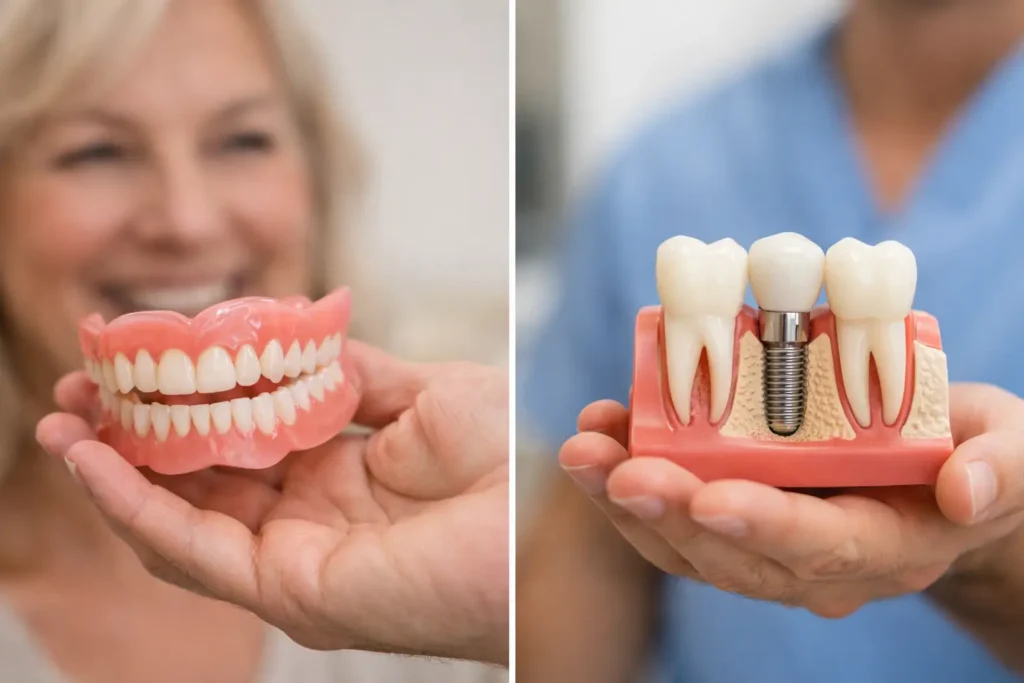
Dentures are removable prosthetic teeth. A full denture replaces all teeth in an upper or lower arch, while a partial denture fills spaces when some natural teeth remain. Modern dentures can look natural and restore the appearance of a complete smile without surgery.
Dental implants are small titanium posts placed in the jawbone to replace missing tooth roots. Once the implant has healed and integrated with the bone, it can support a crown, bridge, or a full-arch restoration. Because implants are anchored in the jaw, they are designed to feel more like natural teeth than a removable appliance.
There is also a middle ground. Implant-supported dentures use a small number of implants to hold a removable or fixed denture more securely. This can be an excellent option for patients who want better stability than traditional dentures but may not need or want an individual implant for every missing tooth.
When dentures may be the right choice
Dentures can be a practical and attractive solution, particularly when someone needs to replace many teeth quickly or is looking for a lower initial cost. They do not require implant surgery, which may make them a suitable option for patients with certain health concerns or those who prefer a less invasive path.
A partial denture can also be useful while you consider a more permanent option. For example, if several teeth need to be removed because of advanced decay or infection, a denture may restore your smile during healing or while you plan future treatment.
The trade-off is that dentures sit on the gums rather than replacing tooth roots. Even well-made dentures can shift slightly while speaking or eating, particularly as the shape of the jaw changes over time. Adhesives may help some people, but they do not solve every fit issue. Regular adjustments, relines, and eventual replacement are normal parts of denture care.
Dentures also need to be removed for cleaning. They should be brushed with a denture-safe cleanser, soaked as recommended, and kept out of hot water, which can warp the material. Your gums, tongue, and any remaining natural teeth still need daily cleaning as well.
When implants may be worth the investment
Implants are often a strong choice for patients who want a secure, long-term replacement for one or more missing teeth. A single implant crown can fill a gap without altering the healthy teeth beside it, unlike a traditional bridge that may require reshaping neighboring teeth.
For people missing many or all teeth, implant-supported options can make eating and speaking feel more dependable. The restoration is less likely to move, which can reduce the worry of a denture slipping during a conversation, meal, or social event.
Another key benefit is jawbone support. After a tooth is lost, the bone in that area gradually shrinks because it no longer receives chewing stimulation through a tooth root. An implant helps stimulate the jawbone, which may help maintain facial structure and provide a more stable foundation for the restoration.
Implants do require a surgical procedure and a healing period. The overall treatment timeline can range from several months to longer, depending on the condition of your gums and bone, whether teeth need to be removed, and whether bone grafting is needed. Some patients can receive a temporary tooth during treatment, so you do not necessarily have to live with a visible gap.
Daily implant care is similar to caring for natural teeth: brush carefully, clean between teeth or around the restoration, and keep up with regular dental visits. Implants cannot get cavities, but the gum tissue and bone around them can become infected if plaque is not controlled. Consistent home care and professional maintenance matter.
Cost is more than the first number
For many families, cost is a major part of choosing between dentures and implants. Traditional dentures generally have a lower upfront cost because there is no surgical placement or implant component. This makes them an accessible way to restore a complete smile when finances or timing are a concern.
Implants usually cost more initially because treatment involves planning, imaging, surgery, healing, and a custom restoration. If bone grafting, extractions, or gum treatment are necessary, those services can add to the total investment.
However, the lowest initial price is not always the lowest cost over time. Dentures may need relines as the jaw changes, and they can need repair or replacement after years of daily use. An implant restoration can also need maintenance or replacement eventually, especially the crown or denture attached to it. The right comparison looks at your expected care needs, not only the first treatment estimate.
A clear consultation should include a personalized treatment plan and a discussion of phased care when appropriate. You may be able to address urgent dental health needs first, then move forward with a longer-term tooth replacement plan when the timing is right.
Comfort, appearance, and everyday life
A properly fitted denture can create a natural-looking smile, and advances in materials allow for more lifelike tooth shapes and shades. Still, it may take time for your cheeks, tongue, and muscles to adjust. New denture wearers often begin with softer foods and gradually reintroduce firmer foods as they become more comfortable.
Implant restorations tend to provide stronger biting stability, which can make a wider range of foods easier to eat. That does not mean implants are indestructible. Ice, hard candy, and using teeth to open packaging can damage crowns and natural teeth alike.
Appearance is personal. Some patients are most concerned about a natural smile in photos. Others want to eat comfortably, speak with confidence, or stop relying on denture adhesive. Sharing those priorities with your dentist helps guide the conversation. The best treatment plan should support your everyday life, not just look good on a treatment chart.
Your oral health determines the starting point
Not every patient is immediately ready for implants. Healthy gums, sufficient bone, and good overall oral hygiene create the best foundation. Smoking, uncontrolled diabetes, active gum disease, and teeth with infection do not automatically rule out implant treatment, but they may affect healing and require additional planning.
Dentures also benefit from a healthy mouth. Sore spots, loose fit, persistent irritation, or difficulty chewing are not issues you should simply accept. These can signal that a denture needs adjustment, the bite has changed, or the supporting tissues need attention.
Advanced imaging and a complete examination can show what is happening beneath the surface. This is especially valuable when deciding whether to preserve remaining teeth, replace a single tooth, or plan a full-mouth restoration. A modern treatment plan should be based on your anatomy and needs, not a one-size-fits-all recommendation.
Choosing a solution you can feel good about
The right choice may be a traditional denture, a single implant, an implant bridge, or an implant-supported denture. There is no prize for choosing the most expensive option, and there is no reason to settle for discomfort if a better-fitting or more stable solution is possible.
At South Zone Dental, patients can discuss tooth replacement in a welcoming setting with a team focused on affordable, high-quality care and modern treatment planning. Bring your questions about cost, healing time, appearance, and maintenance. A clear conversation today can help you choose a smile solution that feels comfortable, functional, and truly yours.