
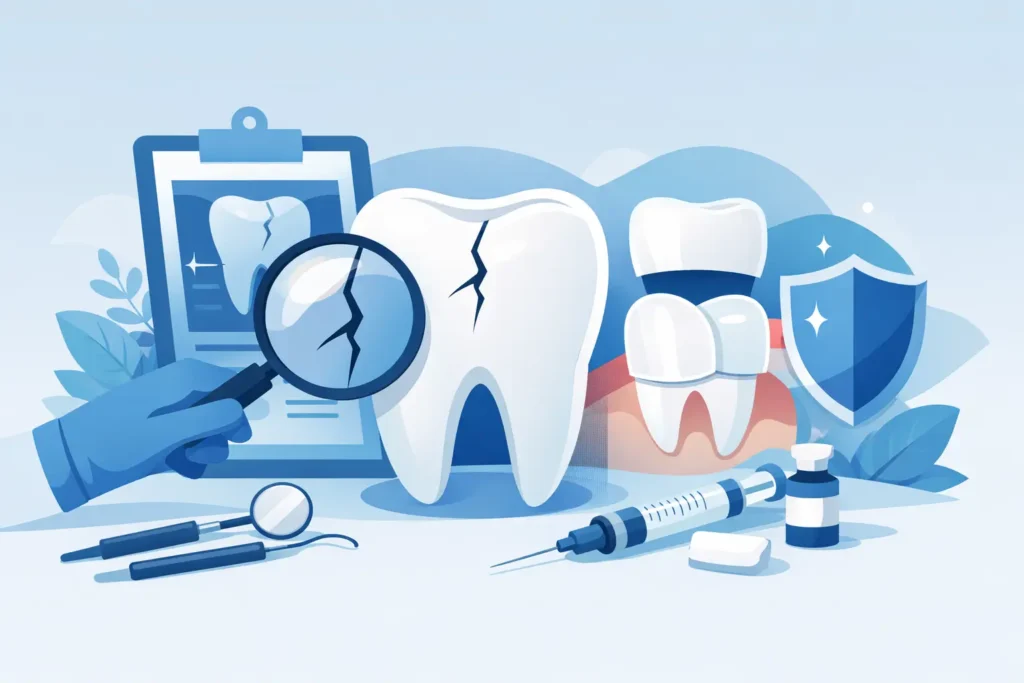
A cracked tooth can begin with one sharp jolt when you bite down, or with a faint ache that comes and goes around hot coffee, cold water, or chewing. Either way, cracked tooth treatment options should be assessed promptly. A crack does not heal on its own, and early treatment can often protect the tooth before the damage reaches the nerve or causes a complete break.
The right solution depends on where the crack is, how deep it extends, whether a piece of tooth has broken away, and whether the pulp inside the tooth is affected. A careful exam and dental X-rays help identify the problem. Some tiny cracks are monitored, while deeper cracks may need a restoration, root canal treatment, or extraction.
Why a Cracked Tooth Needs Timely Care
Teeth are strong, but they are not indestructible. Biting hard foods, grinding or clenching, large older fillings, sports injuries, and sudden temperature changes can all place stress on enamel. A crack may also develop after a fall or a blow to the face.
When you chew, the two sides of a crack can flex apart. This allows bacteria and food debris to enter deeper areas of the tooth. What begins as sensitivity can progress to inflammation, infection, swelling, or a painful fracture below the gumline. Waiting may turn a simpler restoration into a more involved procedure.
Call a dentist promptly if you have pain when biting, sensitivity that lingers after hot or cold foods, a visible line or chipped area, swelling, or a tooth that feels different when you close your teeth together. Severe pain, facial swelling, fever, or trouble swallowing requires urgent attention.
Cracked Tooth Treatment Options by Type of Damage
A dentist will recommend treatment based on the specific type of crack. Not every line on a tooth means the same thing, and choosing the least invasive option that still provides lasting protection is often the goal.
Craze lines: monitoring or cosmetic improvement
Craze lines are very small surface cracks in enamel. They are common in adults and usually do not cause pain or weaken the tooth. In many cases, no treatment is needed beyond routine monitoring.
If the lines affect the appearance of front teeth, cosmetic options may be considered. Polishing, bonding, or veneers can improve the look of the enamel, depending on the tooth and the patient’s goals. The key distinction is that craze lines stay on the surface, while a true crack can extend deeper into the tooth.
Small chips: smoothing or dental bonding
A small chip may be smoothed if it has no effect on bite function or appearance. For a more noticeable chip, composite dental bonding can rebuild the missing area with tooth-colored material. Bonding is usually conservative and can often be completed in one visit.
Bonding is a practical choice for minor damage, particularly on front teeth. However, it may stain, chip, or wear more easily than porcelain over time. Patients who grind their teeth may need a nightguard to help protect the repair.
Cracked cusps: an onlay or crown
The cusp is the pointed chewing portion of a back tooth. A cracked cusp often occurs around a large filling and may break away from the tooth. Although it can feel alarming, the crack does not always reach the pulp.
An onlay or crown can cover and reinforce the remaining tooth structure. An onlay restores the damaged section while preserving more healthy enamel when appropriate. A crown covers the entire visible portion of the tooth and is often recommended when the crack is larger or the tooth needs more support. Both options are designed to distribute biting forces and reduce the risk of the crack spreading.
A deeper cracked tooth: crown, root canal, or both
A crack that extends from the chewing surface toward the root requires more careful evaluation. If the nerve is still healthy, a crown may stabilize the tooth and prevent further movement. If bacteria or inflammation have reached the pulp, root canal treatment may be needed before the crown is placed.
Root canal treatment removes infected or damaged pulp tissue, cleans the inside of the tooth, and seals it. The tooth is then commonly protected with a crown, especially when it is a back tooth that handles significant chewing pressure. While many patients worry about root canal treatment, modern anesthetic and careful techniques are designed to keep care as comfortable as possible.
Not every cracked tooth can be saved. A vertical root fracture, or a crack that extends too far below the gumline, may have a poor long-term outlook. In those cases, removing the tooth may be the healthiest choice.
Split tooth or severe fracture: extraction and replacement
A split tooth has separated into distinct sections. Because the pieces cannot usually be held together predictably, extraction is often recommended. A severely fractured tooth may also need removal if there is not enough stable structure left to restore.
Replacement options can include a dental implant, bridge, or partial denture. A dental implant replaces both the missing tooth root and the visible tooth with a restoration that looks and functions naturally. A bridge may be a suitable alternative when neighboring teeth already need crowns or when an implant is not the right fit. The best choice depends on bone health, bite, budget, timeline, and overall oral health.
What Happens During a Cracked Tooth Exam?
Cracks can be difficult to see, especially if they are beneath an old filling or do not show clearly on an X-ray. Your dentist may use magnification, light, bite testing, and advanced imaging to locate the source of pain and assess the tooth. A cold test or other pulp testing may help determine whether the nerve is healthy.
This evaluation matters because treatment should address the true extent of damage, not just the symptom. For example, placing a filling over a deeper crack may not stop the tooth from flexing. In contrast, placing a crown on a tooth with an untreated infection will not resolve nerve pain. A personalized diagnosis helps avoid both undertreatment and unnecessary treatment.
What to Do Before Your Appointment
Until you can be seen, chew on the opposite side and choose softer foods. Avoid ice, hard candy, nuts, popcorn kernels, and sticky foods that can pull on a weakened tooth. If the tooth is sensitive, avoid very hot or cold drinks.
You can gently rinse with warm water and use a cold compress on the outside of the face if swelling is present. Over-the-counter pain medication may help when taken as directed and when safe for your health history. Do not place aspirin directly on the gum or tooth, as this can irritate the tissue.
If a piece of tooth breaks off, save it if possible and bring it to the appointment. Do not try to glue it back in place. Temporary dental repair material from a pharmacy may cover a sharp edge for a short period, but it is not a substitute for professional treatment.
Preventing Another Crack
Some cracks are impossible to predict, but protecting teeth from repeated stress can lower the risk. A custom nightguard can help patients who clench or grind while sleeping. Treating a bite that places excessive force on one tooth may also prevent recurring damage.
Avoid using your teeth to open packages, cut fishing line, or crack nuts. Regular exams allow dentists to monitor large fillings, worn teeth, and early signs of fracture before they become painful emergencies. For patients who play contact sports, a properly fitted mouthguard offers valuable protection.
Get Care When the Tooth Is Still Savable
Pain from a cracked tooth is not always constant, which makes it easy to put off. But a tooth that hurts only when chewing can still have a significant crack. Acting early may mean the difference between a conservative restoration and losing the tooth.
At South Zone Dental, patients can receive friendly, technology-forward care for urgent concerns as well as long-term smile protection. If you notice a sharp edge, bite pain, swelling, or persistent sensitivity, arrange a dental evaluation as soon as possible. Prompt care gives your natural tooth its best chance to stay strong, comfortable, and part of your smile.