
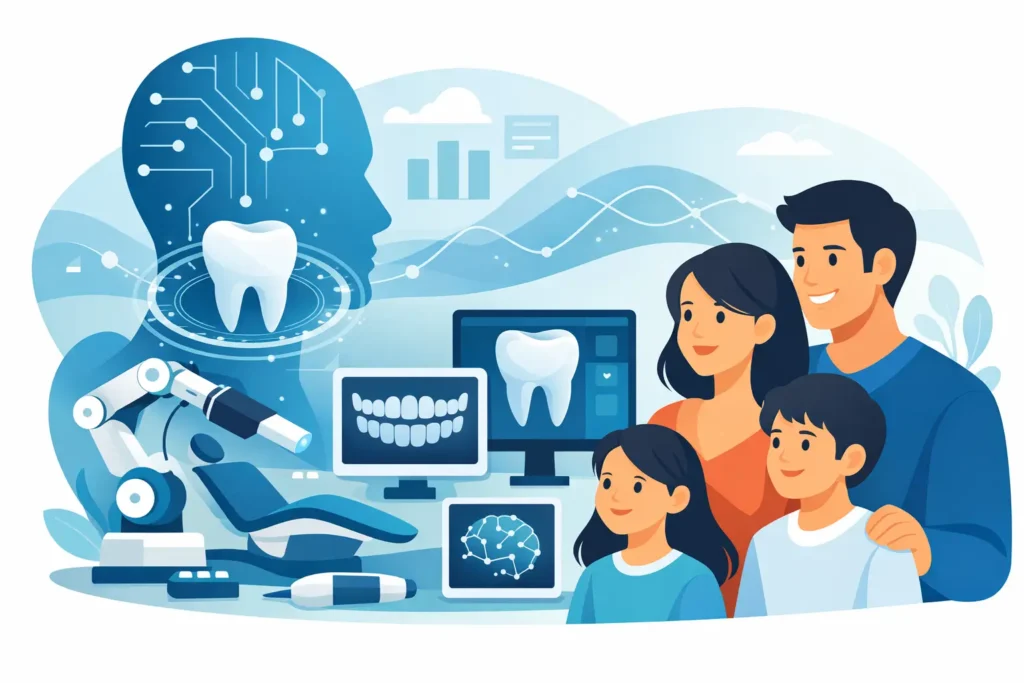
A tiny change on a dental X-ray can be easy to miss, especially before it causes pain. That is where ai in dentistry benefits patients most: it gives dental teams another careful set of eyes when reviewing images, planning treatment, and explaining what is happening in your mouth. It does not replace your dentist’s judgment. It helps make that judgment more informed, visual, and efficient.
For families balancing busy schedules, unexpected toothaches, and the cost of care, better information can make a real difference. AI-supported dentistry can help identify concerns earlier, support clearer conversations, and make visits feel less uncertain.
What AI Means at a Dental Visit
Artificial intelligence in dentistry uses computer systems trained to recognize patterns in dental images and clinical data. When a dentist reviews an X-ray, AI may highlight areas that deserve closer attention, such as a possible cavity between teeth, bone changes around a tooth, or signs of an infection.
The key word is support. AI does not diagnose you on its own, and it should never make treatment decisions without a qualified dental professional. Your dentist considers your X-rays alongside your symptoms, medical history, exam findings, past dental work, and personal goals. AI is one tool in that process, much like digital X-rays or intraoral cameras.
This distinction matters. A highlighted area is not automatically a problem, and an area that is not highlighted still deserves a dentist’s clinical review. The best results come from experienced care paired with thoughtful technology.
AI in Dentistry Benefits Earlier Detection
Many dental problems begin quietly. Early decay may not hurt. Gum disease can progress with little discomfort. Small changes near an old filling or crown may be difficult to spot until they become larger and more expensive to treat.
AI can help dentists review images with greater consistency by flagging patterns that may warrant a closer look. This may support earlier conversations about prevention, monitoring, or conservative treatment. Catching a small cavity early, for example, may mean a simpler filling rather than waiting until the tooth needs more extensive care.
Earlier detection is especially valuable for patients who tend to delay appointments because they feel fine. Regular checkups are not only about cleaning your teeth. They give your dental team a chance to compare changes over time and address concerns before an emergency visit becomes necessary.
There is a practical cost benefit, too. No technology can promise that every issue will be found at its earliest stage, but timely exams and clear imaging can reduce the likelihood of surprises. For cost-conscious families, prevention and early intervention are often the most manageable path.
Clearer Explanations, Not Just More Technology
Dental care can feel overwhelming when you are told you need treatment but cannot see the reason for it. AI-supported imaging can make the conversation more visual. Your dentist can show you an X-ray, explain what they are seeing, and discuss why an area was flagged for review.
That does not mean patients should feel pressured into treatment. In fact, better visuals should create room for better questions. You can ask whether a concern needs treatment now, whether it can be monitored, what happens if you wait, and what options are available for restoring the tooth.
Clear communication is particularly helpful for parents making decisions for children, adults with dental anxiety, and patients who have had confusing treatment recommendations in the past. When the information is easy to understand, it is easier to give informed consent and feel confident about the next step.
More Precise Treatment Planning
AI can also support treatment planning by helping dental professionals assess the details that matter before care begins. For restorative treatments, implants, orthodontic planning, and cosmetic dentistry, accurate digital records and image analysis can help the team evaluate tooth structure, spacing, bite relationships, and bone levels.
The benefit is not that technology makes every case identical. Dentistry is highly personal. A treatment plan that is right for one patient may not be right for another because oral health, budget, timeline, and aesthetic goals are different.
For example, a patient with a worn or damaged tooth may have several reasonable options. A dentist may discuss a conservative repair, a crown, or a biomimetic approach designed to preserve as much healthy tooth structure as possible when appropriate. AI-assisted tools can contribute useful information, but your dentist still determines what fits your specific situation.
For patients considering smile enhancements, digital planning can also help create a more realistic discussion about what is possible. It can support conversations about tooth shape, alignment, whitening, and facial balance while keeping oral health at the center of the plan.
A Better Experience for Busy Families
Technology should make care easier, not more complicated. When AI helps streamline image review and patient education, it can make appointments more efficient without making them feel rushed. The goal is simple: spend less time guessing and more time discussing what you need.
That can be valuable when your child needs a checkup before school, you are fitting an appointment into a workday, or you are dealing with a sudden dental concern. For emergency visits, fast and careful evaluation matters. AI-supported imaging may help the dental team review urgent concerns quickly, while the dentist focuses on relieving pain and determining the right treatment.
At South Zone Dental, modern diagnostic technology is part of a patient-first approach that combines convenience with attentive care. Whether you are visiting for routine prevention, a dental emergency, or a smile-focused treatment, you should still expect a personal conversation and recommendations that respect your priorities.
The Limits of AI Matter, Too
AI is promising, but it is not magic. It can be affected by image quality, existing dental restorations, unusual anatomy, and the type of data used to train the system. It may flag areas that turn out to be harmless, or it may not identify every possible concern.
That is why dental expertise remains essential. A dentist examines your mouth directly, checks your bite, listens to your symptoms, and applies years of clinical judgment. AI cannot feel tooth movement, assess tenderness, understand your health history, or recognize the priorities behind your decision.
Patients should also feel comfortable asking how their information is handled. Digital records and imaging should be managed with appropriate privacy and security practices. If you have questions about a technology used during your visit, asking is always reasonable.
How to Get the Most From AI-Supported Dental Care
The best way to benefit from modern dental technology is to stay involved in your care. Keep regular preventive appointments, mention changes such as sensitivity or bleeding gums, and ask to see the images being discussed. If treatment is recommended, ask what the images show and whether there are alternatives.
It also helps to be honest about practical concerns. If budget, insurance coverage, timing, or dental anxiety affects your decision, tell your dental team. A good practice will explain priorities, help you understand what needs prompt attention, and discuss a plan that is realistic for you.
AI may make dental care more precise and easier to understand, but the most valuable part of any appointment is still the relationship between patient and provider. When advanced tools are paired with compassionate, experienced care, you can make decisions about your smile with less uncertainty and more confidence.