
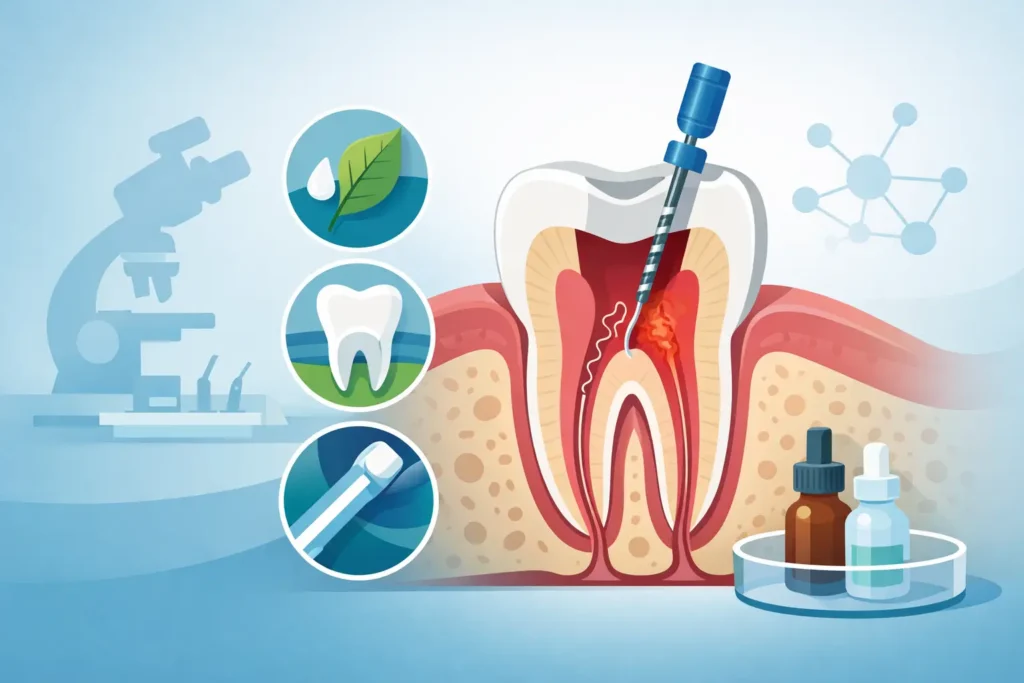
A tooth that needs a root canal is already under stress. It may be cracked, deeply decayed, or inflamed from an old filling that finally gave out. That is exactly why biomimetic dentistry root canal planning matters. The goal is not just to remove infection. It is to save as much healthy tooth as possible and rebuild it in a way that supports strength, function, and comfort.
For many patients, the phrase root canal still brings up one fear – that the tooth will become weak and eventually need a crown, retreatment, or extraction. That concern is understandable. Traditional root canal treatment can be very successful, but the long-term outcome often depends on what happens after the canal is cleaned and sealed. If too much tooth structure is removed during treatment or restoration, the tooth may be more likely to fracture later.
That is where biomimetic thinking changes the conversation.
What biomimetic dentistry means in root canal care
Biomimetic dentistry is based on a simple idea: restore the tooth in a way that mimics how natural teeth are designed to handle pressure. Instead of treating the tooth like a block that needs aggressive cutting and coverage, this approach focuses on conservative preparation, strong bonding, and preserving healthy enamel and dentin whenever possible.
In biomimetic dentistry root canal cases, that often means the dentist looks beyond the infected nerve itself. They evaluate how much natural tooth remains, where the cracks are, how the bite loads the tooth, and which restoration gives the best chance of keeping the tooth stable over time.
Not every root canal case can be restored the same way. A front tooth with minimal damage is very different from a back molar with a large failing filling and thin walls. Biomimetic dentistry does not promise that every tooth can avoid a crown. It does mean the treatment plan is designed around preservation first, not removal first.
Why the restoration matters as much as the root canal
A root canal removes infected or inflamed pulp tissue from inside the tooth. That part addresses pain and infection, but it does not make the tooth stronger. In fact, once a tooth has a large cavity, deep fracture line, or wide access opening, it may already be structurally compromised.
The real question becomes: how should the tooth be rebuilt?
In many cases, the biggest risk after a root canal is not reinfection from the canal itself. It is breakage of the remaining tooth. Molars are especially vulnerable because they handle heavy chewing forces every day. If the remaining cusps are thin or unsupported, a hard bite can split the tooth.
A biomimetic approach aims to reduce that risk by preserving intact tooth structure and using bonded materials strategically. Good bonding can help distribute stress more evenly, but bonding has limits too. If the tooth is severely weakened, a more protective restoration may still be the better option.
How a biomimetic dentistry root canal approach may look
The exact process depends on the tooth, but the mindset is consistent. First, the dentist confirms whether a root canal is truly needed. Sometimes pain comes from a crack, deep filling, or bite issue rather than irreversible nerve damage. Accurate diagnosis matters because unnecessary treatment never helps the patient.
If a root canal is needed, conservative access is often part of the plan. That means creating enough space to clean and seal the canals properly without removing more tooth than necessary. Precision matters here. Advanced imaging and modern diagnostic tools can be especially helpful when the goal is to treat the inside of the tooth while protecting the outside structure.
After the canal is completed, the restoration is selected based on the amount of remaining tooth, the tooth’s location, and the patient’s bite. In some cases, a bonded onlay or conservative restoration may preserve more healthy structure than a full crown. In other cases, a crown is still the safest long-term choice. Biomimetic dentistry is not about refusing crowns. It is about not over-preparing a tooth when a less invasive option can work well.
When this approach can be especially valuable
Patients often benefit from biomimetic planning when the tooth still has meaningful healthy structure left. A tooth with sound enamel margins, limited crack extension, and enough remaining wall thickness may be a good candidate for a more conservative restoration after root canal treatment.
This can also be valuable for patients who want to avoid unnecessary removal of healthy tooth tissue. Many people are surprised to learn that the final restoration often determines how much additional tooth structure is shaped away. A more conservative bonded option can sometimes preserve more of what nature gave you.
Back teeth with moderate damage are often where this discussion becomes most important. These teeth need strength, but they also benefit from preserving the natural architecture that helps them absorb chewing forces.
When a traditional approach may still be best
There is no one-size-fits-all answer in dentistry. Some teeth are simply too damaged for a conservative bonded restoration to be predictable. If decay extends deep below the gumline, if cracks run too far down the root, or if the remaining tooth walls are extremely thin, a crown or even extraction may be the more realistic option.
That does not mean biomimetic principles failed. It means the case needs an honest plan based on biology and long-term function. A good dentist should explain the trade-offs clearly. Saving more tooth structure is a great goal, but only if the restoration can still hold up in daily life.
Patients who grind or clench also need careful planning. Heavy bite forces can defeat even well-done restorations if the case selection is poor. In those situations, protection such as a night guard may be part of keeping the treated tooth stable.
Common myths about root canals and biomimetic care
One common myth is that a root canal automatically makes a tooth brittle. The truth is more nuanced. Teeth usually become vulnerable because of the decay, fracture, and drilling already involved, not because the root canal itself somehow dries the tooth out. What matters most is how much structure remains and how the tooth is restored.
Another myth is that biomimetic dentistry always means a small filling instead of a crown. That is not accurate either. Biomimetic dentistry is a philosophy of preservation and stress management. Sometimes that leads to an inlay or onlay. Sometimes it still leads to a crown because that is the most protective option.
Patients also sometimes assume that if a tooth no longer hurts after a root canal, the job is done. It is not. Delaying the final restoration can put the tooth at risk of leakage or fracture. Finishing the treatment properly is part of protecting your investment and your oral health.
Questions worth asking your dentist
If you have been told you need a root canal, it helps to ask how much healthy tooth remains and what restoration is being recommended after treatment. You can also ask whether a conservative bonded restoration is possible, what the crack risk looks like, and how your bite affects the plan.
These are not cosmetic questions. They are practical ones. A well-restored root canal tooth can last for many years, but durability depends on thoughtful planning from the start.
Practices that combine experience with modern technology are often better positioned to evaluate these details carefully. That is especially helpful when the goal is affordable care that still protects the tooth for the long run.
What patients should take away
Biomimetic dentistry root canal treatment is not a buzzword. It is a more careful way of thinking about how to save a damaged tooth. The focus is on removing infection, preserving healthy structure, and choosing a restoration that supports real-world function instead of doing more drilling than necessary.
For some patients, that may mean a conservative bonded restoration. For others, it may still mean a crown because the tooth needs extra protection. The right answer depends on the condition of the tooth, the strength of the remaining structure, and how that tooth works in your bite.
If you are dealing with tooth pain, a crack, or a deep cavity, the best next step is not to guess. It is to get the tooth evaluated early, before small damage becomes a bigger and more expensive problem. At South Zone Dental, that kind of timely, technology-informed care can make all the difference between simply treating pain and truly protecting your smile for years to come.