
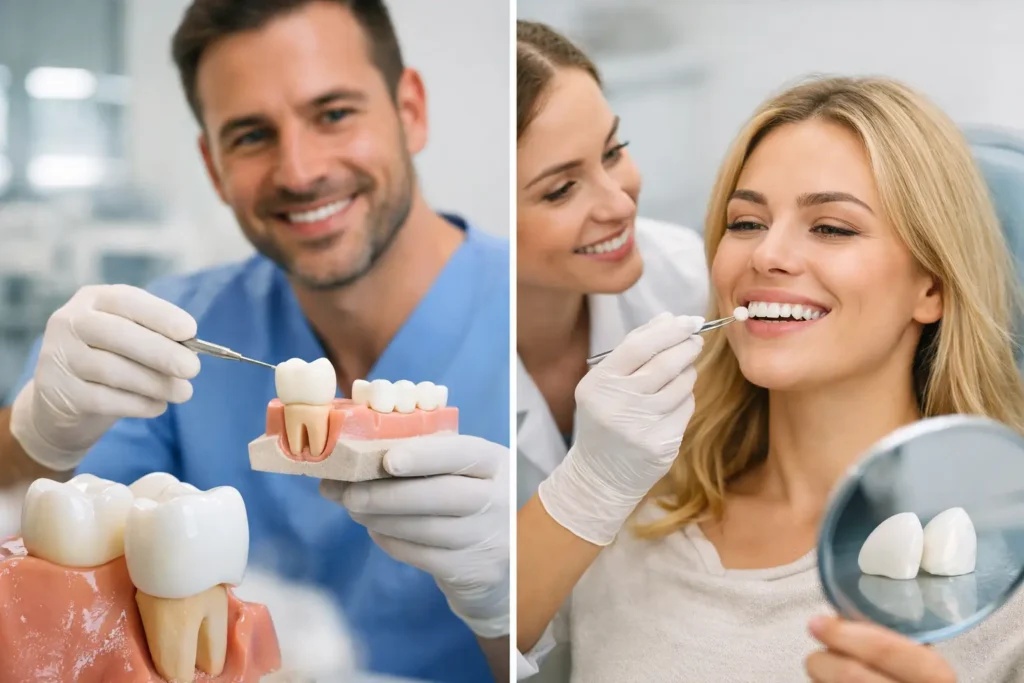
A front tooth can look perfectly fine from a distance yet feel weak when you bite, show a dark edge near the gumline, or make you hesitate in photos. When comparing dental crowns versus veneers, the key question is not simply which option creates the nicer smile. It is which treatment gives your specific tooth the right balance of strength, appearance, and long-term protection.
Both crowns and veneers can transform a damaged or discolored tooth. However, they solve different problems. A thoughtful exam, digital imaging, and a clear conversation about your goals help determine whether the tooth needs full protection, a cosmetic improvement, or a more conservative treatment altogether.
Dental Crowns Versus Veneers: The Main Difference
A dental crown covers the entire visible portion of a tooth, much like a protective cap. It is designed to restore a tooth that has lost substantial structure, has a large filling, has cracked, or has been weakened after root canal treatment. Crowns can be made to closely match the shade, shape, and translucency of nearby natural teeth, so they can improve appearance while performing an essential protective role.
A veneer is a thin custom shell bonded to the front surface of a tooth. It is primarily an aesthetic treatment. Veneers can improve the look of teeth that are stained, slightly chipped, unevenly shaped, mildly crowded, or separated by small gaps. Because they usually cover only the front and edge of the tooth, they require less tooth reduction than a crown in many cases.
Think of a crown as reinforcement for a tooth that needs structural support. Think of a veneer as a precision cosmetic covering for a tooth that is fundamentally healthy enough to keep doing its job.
When a Crown May Be the Better Choice
A crown is often recommended when the tooth itself is compromised. For example, a tooth with a deep crack may still look acceptable, but chewing forces can cause that crack to worsen. Covering the tooth with a crown can help hold it together and reduce the risk of a more serious fracture.
Crowns are also common after root canal therapy. Once the inner nerve tissue has been treated, the tooth may become more prone to fracture, especially if it is a back tooth used for heavy chewing. A crown can restore its function and help protect the remaining tooth structure.
Your dentist may also discuss a crown if you have a very large filling, significant decay, severe wear, or an old restoration that is failing. In these cases, placing a veneer on the front of the tooth would not address the underlying weakness.
For front teeth, a crown can still look natural. Modern ceramic materials offer excellent color matching and can be customized so the restored tooth blends with your smile. The goal is not to create a tooth that looks artificial or overly bright. It is to create a restoration that suits your face, neighboring teeth, and smile preferences.
What the crown process involves
For a traditional crown, the dentist carefully reshapes the tooth to make room for the restoration. An impression or digital scan is used to plan the crown, and a temporary crown may be placed while the final restoration is made. At the final appointment, the crown is checked for fit, bite, color, and comfort before it is bonded in place.
The amount of preparation depends on the tooth and the crown material. When possible, preserving healthy tooth structure remains a priority. A strong, well-designed crown should support the tooth without removing more enamel than necessary.
When Veneers May Be the Better Choice
Veneers are often a good option when your main concern is how a front tooth looks and the tooth is otherwise healthy. They can cover discoloration that whitening may not fully improve, such as staining related to certain medications, old dental work, or changes within the tooth itself.
They can also improve small chips, uneven edges, minor gaps, and teeth that appear short or misshapen. For someone who wants a more balanced, brighter smile without placing full crowns on healthy front teeth, veneers may offer a more conservative cosmetic path.
Veneers are not automatically the right answer for every smile concern. If a tooth has active decay, a large existing filling, a deep crack, or poor enamel quality, a veneer may not have the stable foundation it needs. Treating gum disease, decay, or bite problems first is essential for a result that lasts.
What the veneer process involves
Most veneers require a small amount of enamel to be reshaped so the veneer can sit naturally against the tooth. A digital scan or impression helps create a customized restoration that reflects your desired shade and shape. Some patients receive temporary veneers while the final ones are created.
At the bonding visit, each veneer is checked carefully before it is secured to the tooth. Small details matter. The edge length, surface texture, color, and position all affect whether veneers look like natural teeth or look out of place.
Appearance, Strength, and Tooth Preparation
Both treatment options can produce beautiful results, but the trade-offs are different. Veneers preserve more of the tooth in many cases, which makes them appealing when the tooth is healthy. Crowns require more coverage and preparation, but that additional coverage provides more protection for a weakened tooth.
A veneer is not a shortcut for a tooth that needs a crown, and a crown is not always necessary for a tooth that only needs a cosmetic improvement. Choosing the more extensive treatment when a conservative option would work can remove healthy tooth structure. Choosing the less protective treatment for a damaged tooth can lead to repeated repairs and frustration.
Your bite also matters. People who clench or grind their teeth place extra pressure on restorations. A veneer can still be possible for some patients, but the treatment plan may include a night guard and careful bite adjustment. If grinding is severe or the tooth has heavy damage, a crown may offer better protection.
How Long Do Crowns and Veneers Last?
With good home care and regular dental visits, both crowns and veneers can last many years. Their lifespan depends on the material used, the health of the supporting tooth and gums, daily habits, and how much force they receive.
Neither treatment is indestructible. Biting ice, opening packages with your teeth, chewing pens, and untreated grinding can chip or loosen restorations. Decay can also develop around the edges if plaque is not removed consistently. Brushing twice daily, cleaning between teeth, and attending routine exams helps protect your investment.
A crown may eventually need replacement because of wear, changes at the gumline, a fracture, or decay around its margin. Veneers may need replacement if they chip, debond, or no longer match surrounding teeth after years of natural color change. Replacing either restoration may involve new planning, so choosing a shade and design you feel confident about from the beginning is worthwhile.
Cost and Insurance Considerations
Cost matters, especially when you are planning care for yourself or your family. Crowns are often considered restorative treatment when they are needed to repair a damaged or weakened tooth. Depending on your insurance plan and the reason for treatment, some coverage may be available.
Veneers are usually considered cosmetic, so insurance coverage is less common. The price can vary based on the number of teeth treated, the material selected, and the complexity of your smile design. A dentist should explain the expected fees, alternatives, and likely maintenance before treatment begins.
The lowest initial cost is not always the most affordable option over time. If a damaged tooth receives a cosmetic-only treatment that cannot withstand normal chewing, repairs may add up. On the other hand, placing crowns on teeth that could be improved conservatively may create unnecessary future replacement needs. The best value is a treatment plan that fits the condition of your teeth, not a one-size-fits-all package.
Questions to Ask Before You Decide
Before moving forward, ask what problem the treatment is solving. Is the tooth weak, cracked, decayed, discolored, or simply not the shape you want? Ask how much healthy enamel must be removed, what material is recommended, and what maintenance the restoration will need.
It is also helpful to discuss your bite, grinding habits, and expectations for color. If you are considering whitening, it is usually best to complete whitening before selecting the final shade for a crown or veneer, because restorations do not whiten like natural enamel.
At South Zone Dental, patients can discuss restorative and cosmetic options in one welcoming setting, with modern diagnostic tools to support a clear, personalized recommendation. Whether you are dealing with a broken tooth, an old filling, or a smile concern that has been bothering you for years, you deserve an explanation that feels practical and pressure-free.
The right choice often becomes clearer once your dentist evaluates what lies beneath the surface. A veneer can bring confidence to a healthy tooth that needs a cosmetic refresh. A crown can protect a tooth that has worked hard and needs a stronger future. Start with the health of the tooth, then choose the solution that lets you smile, speak, and eat with confidence.