
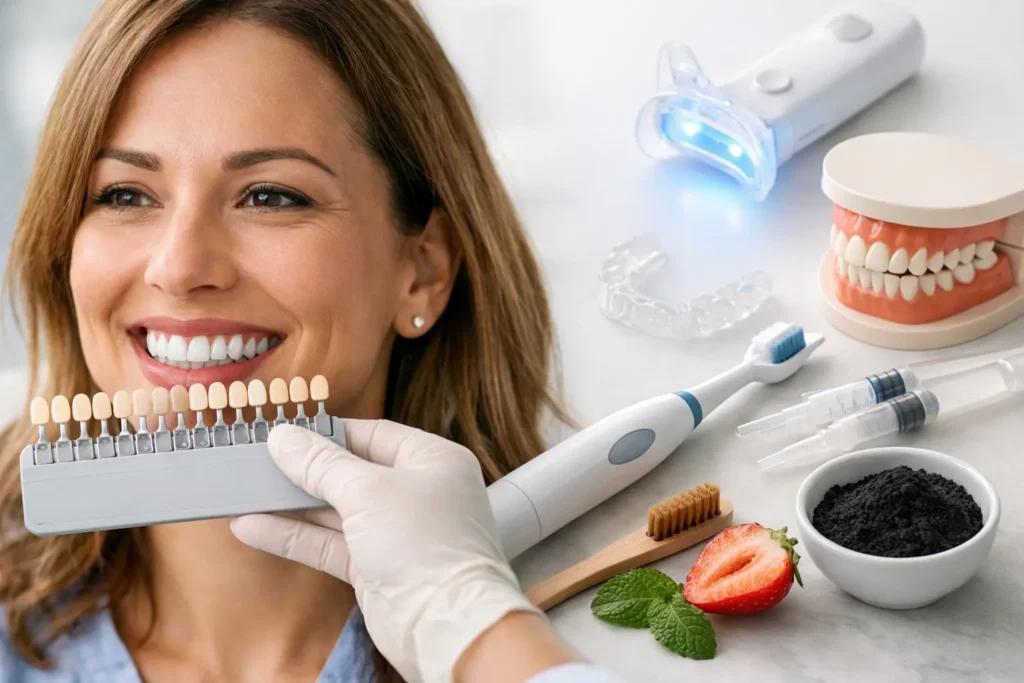
Coffee can leave a mark long after the mug is empty. The same goes for tea, red wine, tobacco, certain medications, and simply the natural changes that happen to teeth over time. The best treatments for stained teeth depend on what caused the discoloration, where it sits in the tooth, and the condition of your gums and enamel. A safe dental assessment is the quickest way to avoid spending money on a treatment that will not give you the result you want.
At South Zone Dental, we help Surrey patients find comfortable, practical solutions for brighter smiles, whether they are preparing for a special occasion or finally addressing years of staining. Some stains respond beautifully to whitening. Others need a different cosmetic approach. Here is how to tell the difference.
Why Teeth Become Stained
Most tooth discoloration falls into two categories. Extrinsic stains sit on the outer enamel surface. They are often linked to dark drinks, highly pigmented foods, smoking, and plaque buildup. These stains can range from light yellowing to brown or dark surface marks.
Intrinsic stains develop within the tooth structure. They may be caused by aging, trauma, certain medications taken during tooth development, excessive fluoride exposure, or a tooth that has lost its vitality after an injury. Intrinsic discoloration is not always improved with standard whitening alone.
There is also a third factor that patients often overlook: buildup. Tartar can make teeth look yellow, brown, or dull even when the enamel itself is healthy. That is why a professional exam and cleaning are often the right first step before any cosmetic whitening plan.
Best Treatments for Stained Teeth
1. Professional dental cleaning
A professional cleaning removes plaque, tartar, and many surface stains that brushing cannot remove at home. It is the most conservative option and can make a noticeable difference for people whose discoloration is largely caused by coffee, tea, smoking, or missed cleanings.
Cleaning will not change the natural shade of your enamel, and it will not erase deep internal stains. Still, it provides a healthier, cleaner starting point for any future whitening treatment. If bleeding gums, sensitivity, or decay are present, addressing those concerns first protects both your health and your cosmetic result.
2. In-office teeth whitening
For many adults with generally healthy teeth and surface-level yellowing, in-office whitening offers the fastest noticeable improvement. A dentist uses professional-strength whitening materials and protects the gums and soft tissues throughout treatment. This allows for more controlled results than over-the-counter products can typically provide.
In-office whitening is a strong choice when you want a brighter smile for a wedding, job interview, family photos, or another upcoming event. Results vary with the original tooth shade and the type of staining, but many patients see a significant improvement in one visit.
The trade-off is temporary sensitivity for some patients. This usually fades quickly, and your dental team can adjust the approach when sensitivity is a concern. Whitening also does not change the color of crowns, fillings, veneers, or bonding. If you have visible dental work, your dentist can help you plan a natural-looking match.
3. Custom take-home whitening trays
Custom whitening trays offer professional guidance with more flexibility. Your dentist creates trays that fit closely around your teeth, helping the whitening gel stay where it belongs and reducing unnecessary contact with your gums. You wear them at home according to the instructions provided.
This option is often ideal for patients who prefer gradual improvement, have a busy schedule, or want to maintain their results over time. It can also be easier to manage sensitivity because treatment days can be adjusted as needed.
Store-bought strips may seem less expensive upfront, but they are made to fit a wide range of smiles. Uneven coverage, gum irritation, and inconsistent results are common frustrations. Custom trays are designed around your teeth, which makes a difference in both comfort and appearance.
4. Whitening for a dark single tooth
One dark tooth needs a closer look. A tooth can turn gray, brown, or noticeably darker after trauma, decay, or a previous root canal. External whitening may improve the shade somewhat, but it may not fully address discoloration that comes from inside the tooth.
Your dentist may recommend internal whitening after confirming that the tooth is healthy and properly treated. In other cases, bonding, a veneer, or a crown may be the more reliable cosmetic choice. The right solution depends on the tooth’s strength, location, and underlying condition. A dark tooth should never be treated as a cosmetic issue alone until the cause has been checked.
5. Composite bonding
Composite bonding uses tooth-colored resin to cover small areas of stubborn discoloration or improve the look of a tooth with chips, uneven edges, or minor shape concerns. It is often a more conservative and budget-conscious option than veneers because it usually requires little to no removal of natural enamel.
Bonding can be an excellent solution for one or two teeth that do not respond to whitening. It does have limits. Resin can stain over time, especially with frequent coffee, tea, or tobacco use, and it may need polishing, repair, or replacement in the future. Good home care and regular cleanings help keep it looking its best.
6. Porcelain veneers
Veneers are thin, custom-made porcelain coverings placed over the front surface of teeth. They can mask deep staining while also improving shape, spacing, and minor alignment concerns. For patients with severe intrinsic discoloration or several teeth that need a more complete cosmetic change, veneers can create a highly natural, consistent result.
Veneers are a larger investment than whitening or bonding, and the process usually involves modifying a small amount of enamel. They are best chosen after a careful conversation about your long-term goals, bite, oral health, and budget. They do not whiten like natural enamel, so selecting the right shade at the start matters.
7. Crowns for heavily damaged teeth
A dental crown covers the entire visible portion of a tooth. It is not the first choice for simple staining, but it can be the best option when a dark tooth is also cracked, heavily filled, worn down, or weakened after root canal treatment. A crown restores strength while improving the tooth’s appearance.
Because crowns involve more tooth preparation than veneers or bonding, they should be recommended for structural reasons, not just to make a healthy tooth whiter. Modern materials can be selected to blend naturally with surrounding teeth, giving you an improvement that looks good and functions well.
What About Whitening Toothpaste and Home Remedies?
Whitening toothpaste can help lift fresh surface stains, particularly when used as part of a consistent brushing routine. However, it cannot bleach the internal color of a tooth. Some formulas are more abrasive than others, so using them too aggressively may contribute to sensitivity or enamel wear.
Charcoal powders, lemon juice, baking soda scrubs, and other viral home remedies are not a substitute for dental whitening. Acidic ingredients can weaken enamel, and abrasive products can roughen the tooth surface, making future stains more likely to cling. A brighter smile should not come at the expense of healthy enamel.
How to Keep Your Smile Brighter After Treatment
Whitening results are not permanent, but simple habits can help them last longer. Rinse with water after coffee, tea, red wine, or dark berries. Use a straw for cold dark beverages when practical. Brush twice daily with fluoride toothpaste, clean between your teeth every day, and schedule regular dental cleanings.
If you smoke or vape, reducing or quitting can make a major difference for both stain prevention and gum health. For patients who choose professional whitening, occasional touch-up treatment may be enough to maintain the shade they enjoy.
Choose a Treatment That Protects Your Teeth
The most effective cosmetic solution is not always the strongest whitening product. It is the treatment that fits your teeth, your oral health, and your goals. A cleaning may be all you need. For deeper stains, professional whitening, bonding, veneers, or crowns may offer a more predictable result.
If stained teeth are making you hide your smile, a dental visit can give you clear answers without pressure. A friendly consultation at South Zone Dental can help you explore modern, affordable options and move forward with a treatment plan that feels right for you.